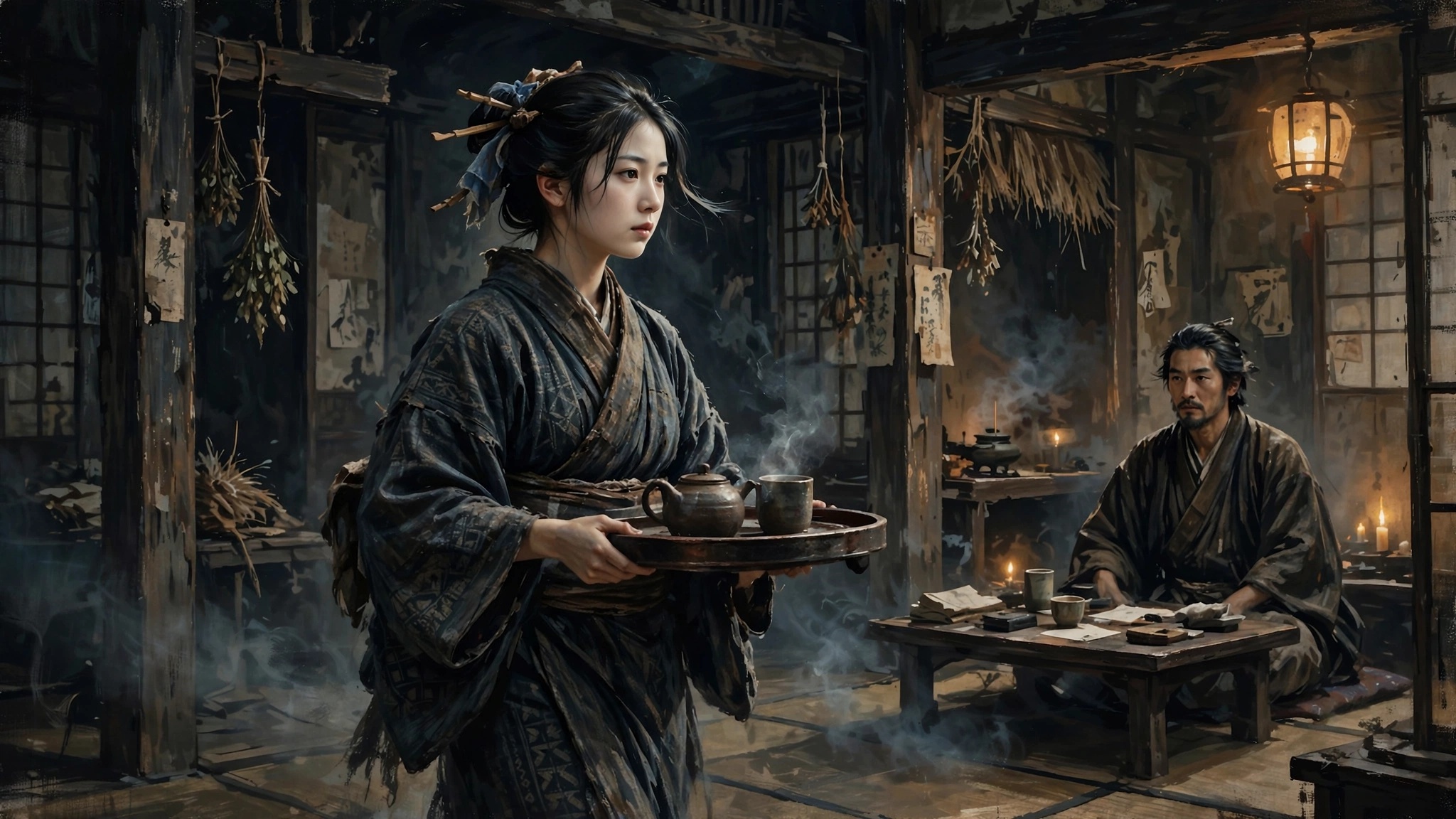


The hands arrived before the face did. That is the order the young clerk insisted on, every time he was asked to describe what happened behind his closed eyes — first the cold pressure at the windpipe, then, rising out of the dark like something surfacing from river water, a woman’s features he knew too well to mistake for a stranger’s. No priest had been summoned when the household finally understood what was killing him. No talisman was pasted to a door. The affliction had a name in the old vocabulary of Edo households, and the name was ikiryō — the living wraith, the double a soul sheds without ever leaving its body behind.
The Clerk Who Could Not Close His Eyes
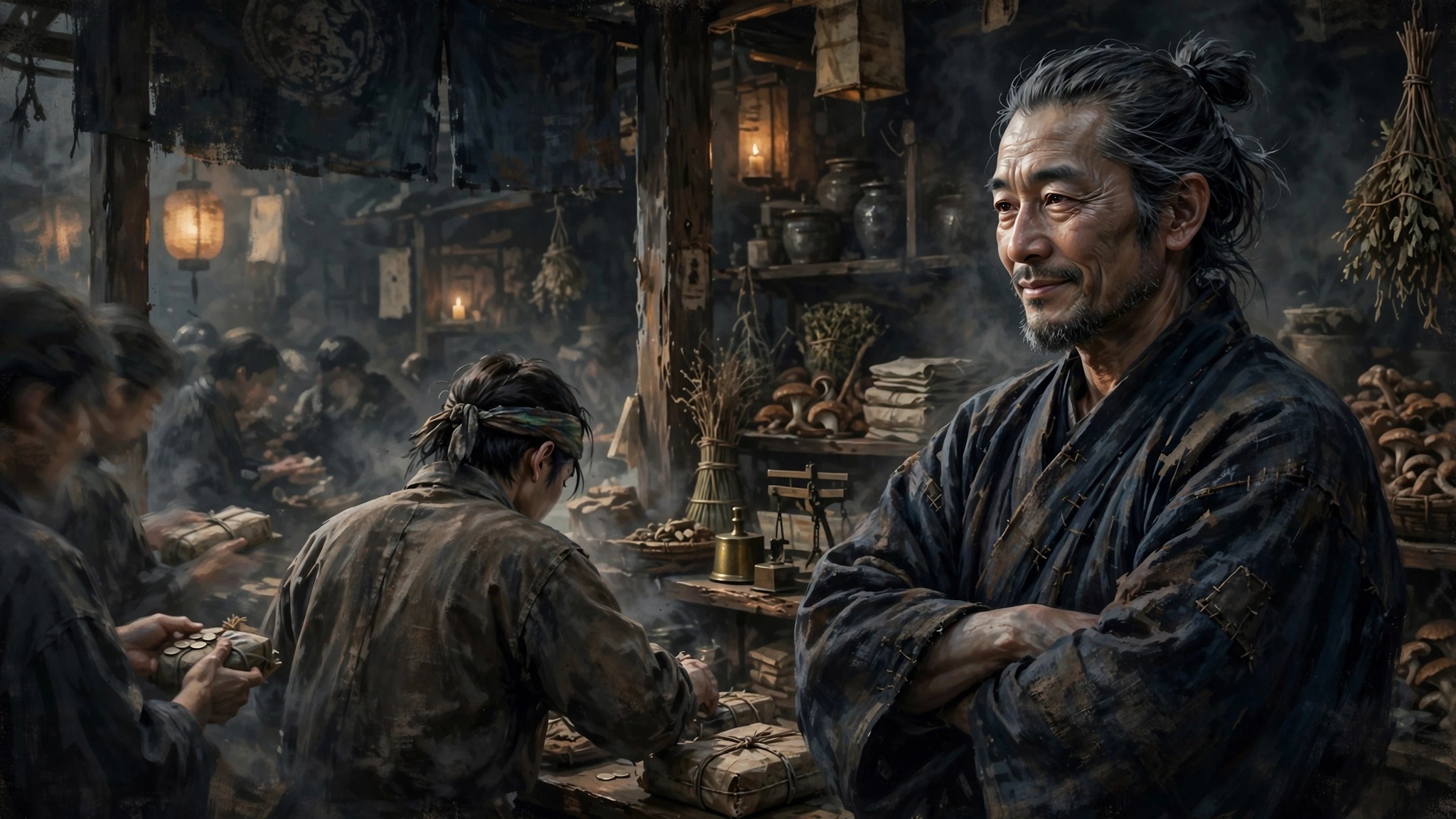 Kihei’s Approval.
He is given to us only as the nephew — never a personal name, only his relation to Rokubei, the head clerk of a prosperous porcelain dealership in the river district of Reigan-jima. Twenty-two years old, trained in the pottery trade in Osaka, he had been summoned east to help manage a business that had outgrown one man’s hands. By every account preserved of him, he was faultless: quick at the ledgers, courteous to the apprentices, devoted past the point of necessity to the shop’s affairs.
Seven months into his employment, the wasting began. No fever explained itself to the physicians of Edo who filed through his sickroom — men accustomed to the ordinary catalogue of fluxes and chills, who examined his pulse and his tongue and withdrew, one after another, into the next room to confess they had no name for what was consuming him. The young man himself had the name already. He had simply not yet found the courage, or the audience, willing to hear it spoken aloud.
It was Rokubei — who had raised the boy nearly as a father does — who finally sat with him and offered the only explanation that seemed to fit a young man wasting without visible wound: a hidden love, a shame too heavy to confess. The nephew’s answer, when it came, overturned that entire theory. There was no woman he desired. There was a woman who desired his death, and she was the wife of his employer, Kihei himself, and she had never once left her own parlor to do it.
Reigan-jima: The World Behind the Shop Curtain
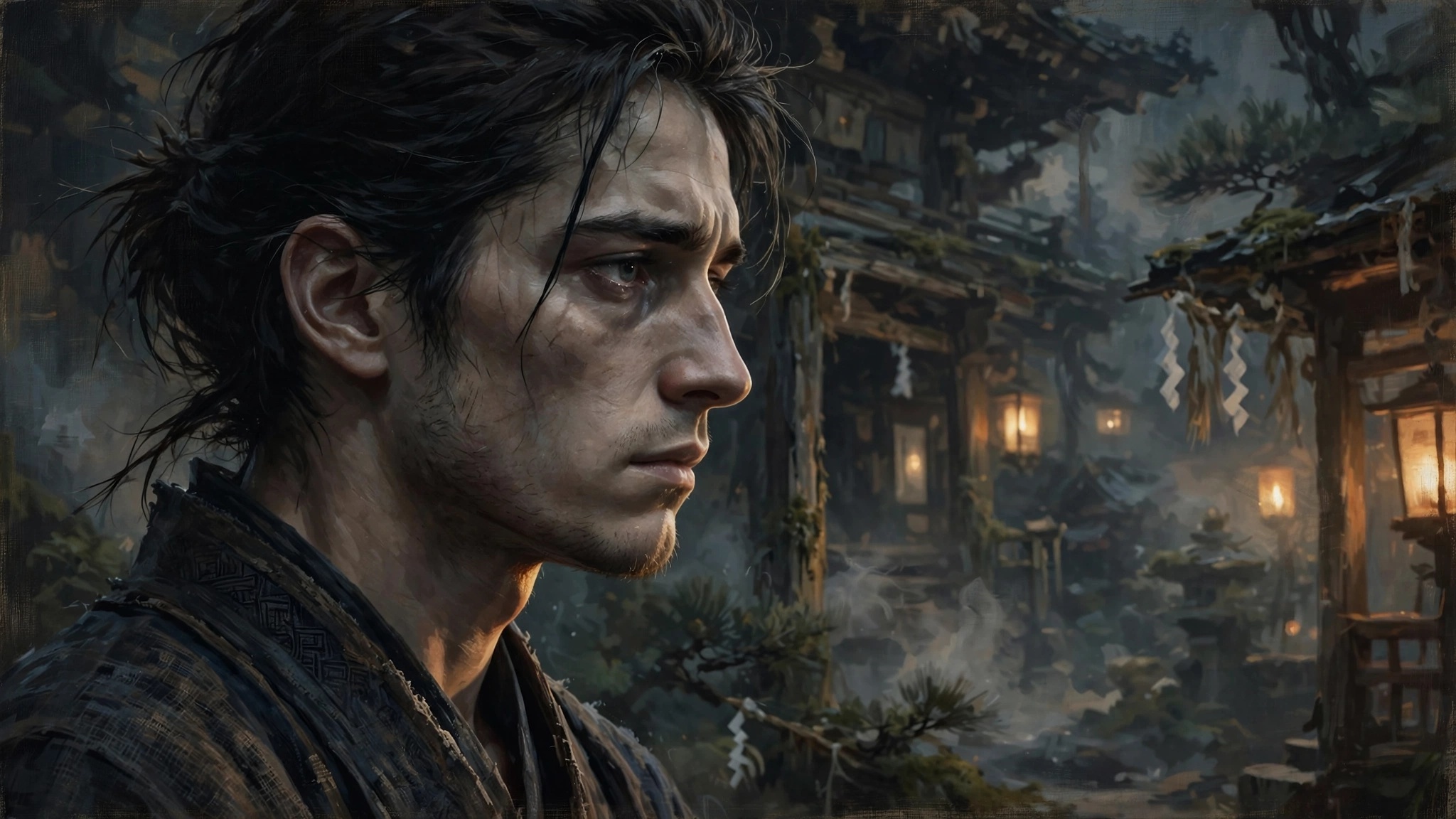 Nephew’s Resignation.
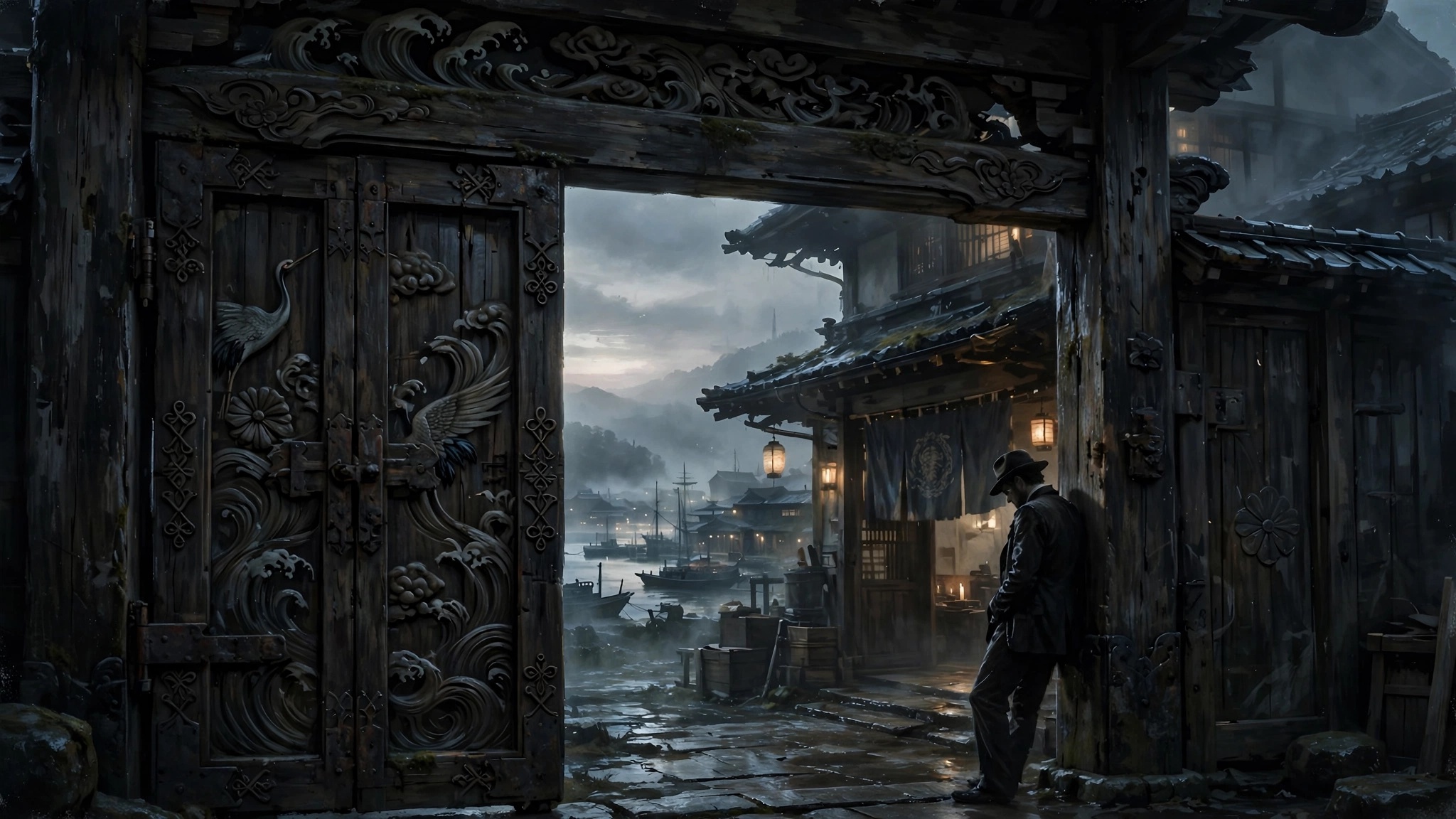
To understand why this confession carried the weight it did inside that household, it helps to understand the world Reigan-jima represented. This was reclaimed land along Edo’s waterways, a merchant district built on commerce rather than lineage, where a family’s entire fortune might be a single shop’s reputation for honest dealing in porcelain, lacquerware, or dry goods. In such houses, the line between business partner and family member was porous by necessity — clerks ate at the family table, apprentices slept under the family roof, and a trusted employee could, within a few years, hold more practical authority over the shop’s survival than the owner’s own blood heir.
This is the condition under which Kihei’s wife lived, and it is historical interpretation — not stated outright in the household’s own account, but consistent with everything known of Edo-period merchant households — that her fear had a very ordinary shape before it became an extraordinary one. Her son, the record says plainly, was good-natured to the point of foolishness, easily led. A clever outsider holding real authority over apprentices and accounts was, in the plain arithmetic of inheritance, a genuine threat to a mother watching her son’s future narrow by comparison.
What makes the account a piece of kaidan — ghost literature — rather than merely domestic drama is that this fear never translated into action, scheming, or even a harsh word spoken aloud. It translated, instead, into something that left the house entirely on its own and did the strangling for her.
What Is an Ikiryō? The Living Wraith in Japanese Folklore
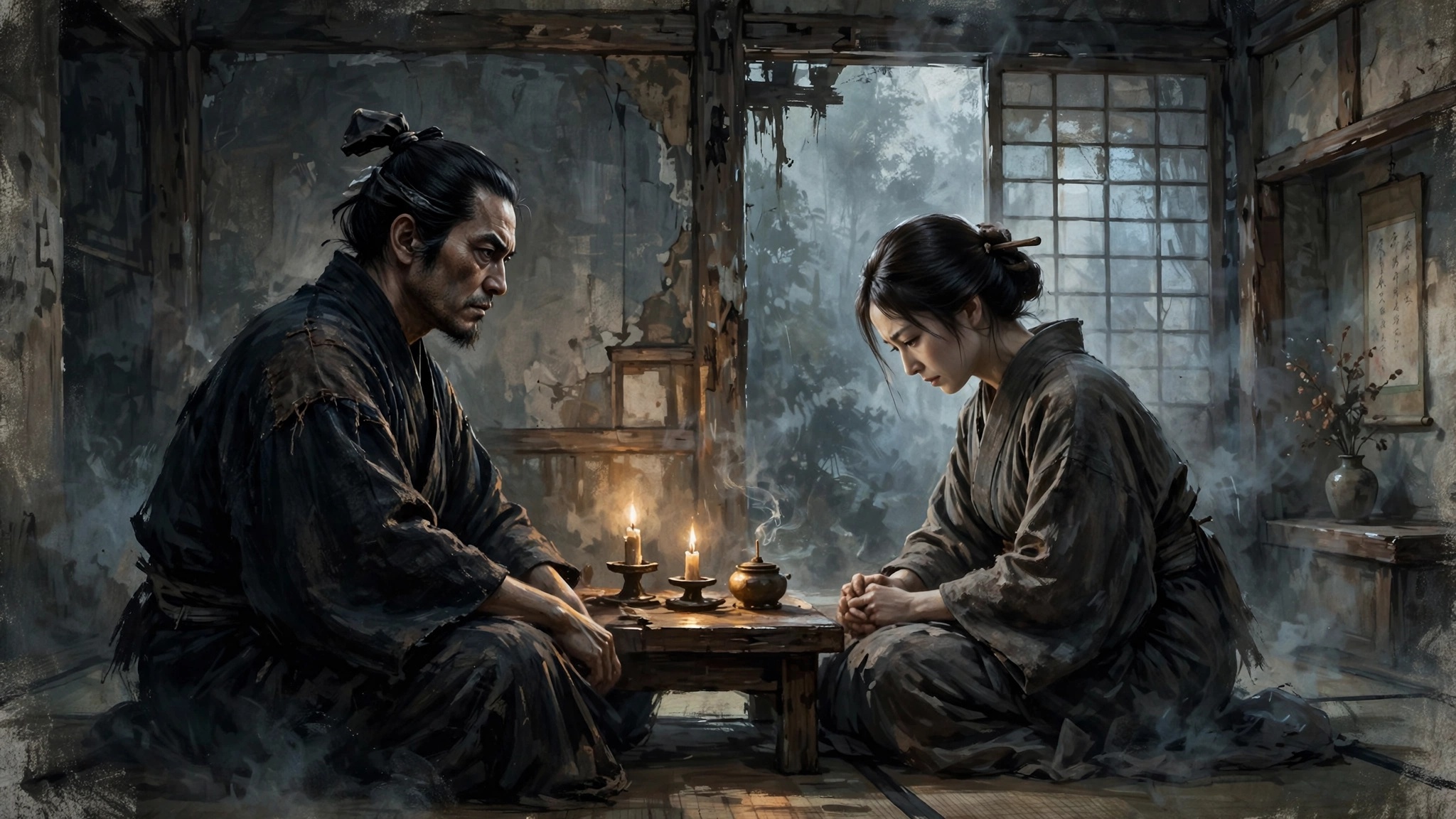 Kihei’s Accusation.
Japanese folklore has always drawn a careful distinction between the onryō — the vengeful spirit of the dead — and the ikiryō, the wraith cast off by a soul still housed in a living body, often without that person’s full knowledge or consent. The belief held that obsession, whether romantic or hateful, could grow heavy enough to detach a fragment of spirit from its owner and send it out into the world to act on feelings the conscious mind had tried, and failed, to suppress.
The Precedent of Lady Rokujō
The most celebrated literary instance predates the Edo period by seven centuries. In Murasaki Shikibu’s The Tale of Genji, the jealous noblewoman Lady Rokujō unknowingly sends her ikiryō to attack her rival Yūgao, and later the pregnant Lady Aoi — a possession so complete that witnesses recognize Rokujō’s voice and scent emerging from the stricken woman’s own mouth. Rokujō herself, upon waking, finds her sleeves inexplicably perfumed with the incense burned during the exorcism rites performed on her victim, and is left to realize, in horror, what her own grief had done without her leave.
Edo-Period Elaborations
By the time Ueda Akinari compiled Ugetsu Monogatari in 1776, and Toriyama Sekien catalogued the supernatural taxonomy of his Gazu Hyakki Yagyō in the same decade, the ikiryō had become a settled fixture of the era’s ghost literature — distinct from a vengeful corpse-spirit precisely because its origin was living, ordinary, and frequently unintentional. The Reigan-jima account fits this older Edo logic exactly: no death, no grave, no single act of violence to point to. Only a woman’s unmanaged heart, operating at a distance she herself never crossed.
The Logic of the Household: Confession Without Exorcism
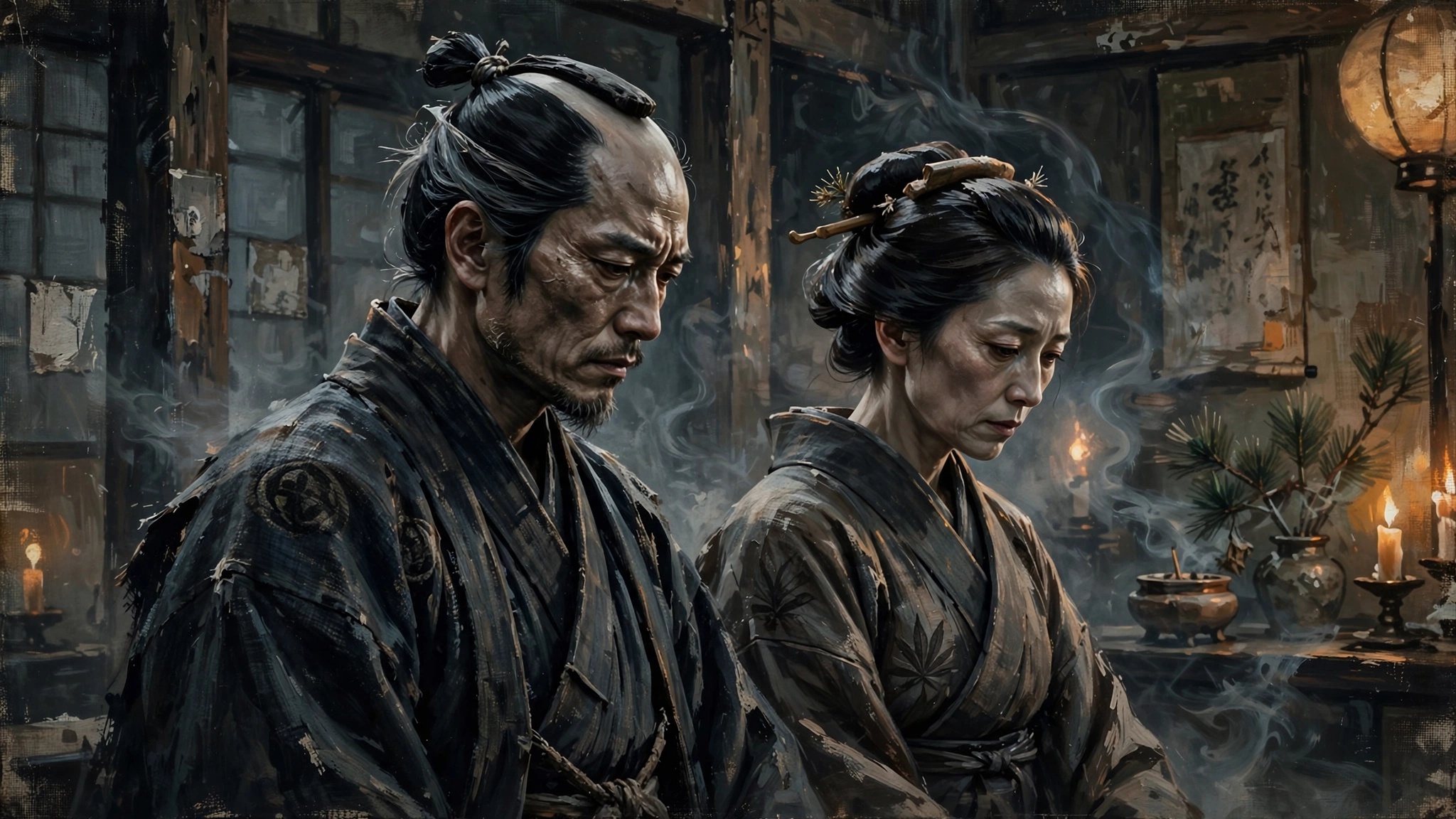 Acceptance of the Unseen.
What distinguishes this particular account from much of the genre is its almost clinical restraint. No priest is sent for. No rite of separation is performed. Kihei does not doubt his wife’s confession any more than Rokubei doubted his nephew’s — two honest admissions, pointing at the same impossible mechanism, simply absorbed by the household as settled fact, the way a family absorbs a debt without first understanding its arithmetic.
This absence of ritual is itself worth dwelling on. Where a Buddhist household confronting an onryō might call for sutra-reading or a priest’s intervention, the record here reaches instead for a solution that is almost administrative: distance. Kihei opens a branch shop elsewhere in the city, sends his nephew there under Rokubei’s continued supervision, and the visitation simply stops the night the young man leaves his uncle’s roof.
The implicit theology is worth stating plainly, as historical interpretation rather than established fact: in this household’s understanding, hatred required proximity to the object of its obsession the way fire requires fuel. Remove the fuel, and the ikiryō — lacking a body to haunt within reach — loosens its grip not through holy intervention but through simple geographic failure. Whether the wife’s hatred itself subsided, or merely lost its channel, the record does not presume to say.
Historical Legacy & Archival Footnotes
Accounts of this kind rarely survive through a single celebrated literary compiler the way the ghost of Okiku or the tale of Yotsuya Kaidan did through theatrical adaptation. This particular story belongs instead to a quieter, more durable strand of Edo-period transmission: the household kaidan, passed down among merchant families — particularly, as the record notes, those who kept porcelain shops — not as entertainment but as caution. It survives the way a family recipe survives, retold without embellishment because embellishment was never the point.
That transmission pattern places it alongside the broader tradition of setsuwa and domestic ghost-telling collected across centuries, from the Heian-era anecdotes gathered in the Konjaku Monogatarishū to the Edo zuihitsu essayists who recorded their neighbors’ strange afflictions as a form of moral bookkeeping. Lafcadio Hearn, writing in Kwaidan: Stories and Studies of Strange Things at the turn of the twentieth century, drew on exactly this living oral stratum — stories still circulating in households and teahouses, never quite canonized, never quite forgotten.
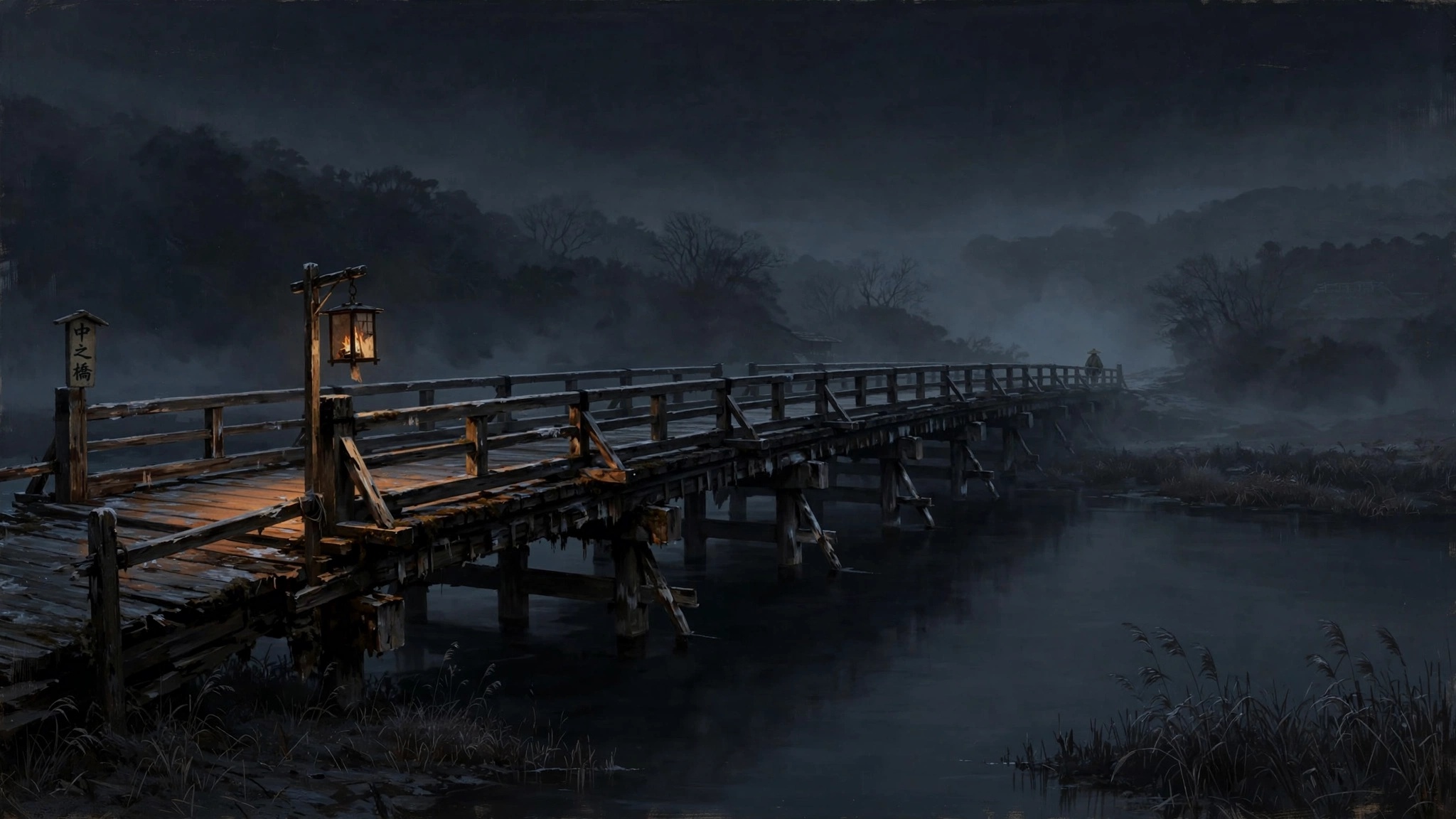
No address in modern Reigan-jima — now absorbed into Tokyo’s Chūō ward, long since reshaped by land reclamation, fire, and the 1923 earthquake — preserves any trace of Kihei’s shop. The porcelain trade that once defined the district has scattered into museum collections and private kilns. What remains is only the account itself, and the particular discomfort it was built to produce: that the most dangerous ghost a household might face was not a spirit returning from beyond the grave, but a living person’s own unexamined heart, operating at a distance its owner never consciously chose to cross.
Primary Texts & Scholarly References
- Murasaki Shikibu (11th century), The Tale of Genji — the Lady Rokujō ikiryō episodes, the foundational literary precedent for the living wraith.
- Ueda Akinari (1776), Ugetsu Monogatari — Edo-period ghost tales elaborating obsession, grief, and spectral transformation.
- Toriyama Sekien (1776), Gazu Hyakki Yagyō — illustrated taxonomy of Edo-period supernatural beings, including spirit doubles.
- Lafcadio Hearn (1904), Kwaidan: Stories and Studies of Strange Things — compiled oral-tradition ghost accounts circulating in households and teahouses.
- Konjaku Monogatarishū (12th century) — early setsuwa collection preserving domestic and spiritual anecdotes of the kind household kaidan descend from.
- National Diet Library digital collections — holdings on Edo-period Reigan-jima merchant records and porcelain trade history.
Soundtrack & Audio Credits
Music: ‘Candle Light’ by Kraosando (https://kraosando.bandcamp.com) — Licensed under CC BY 4.0