
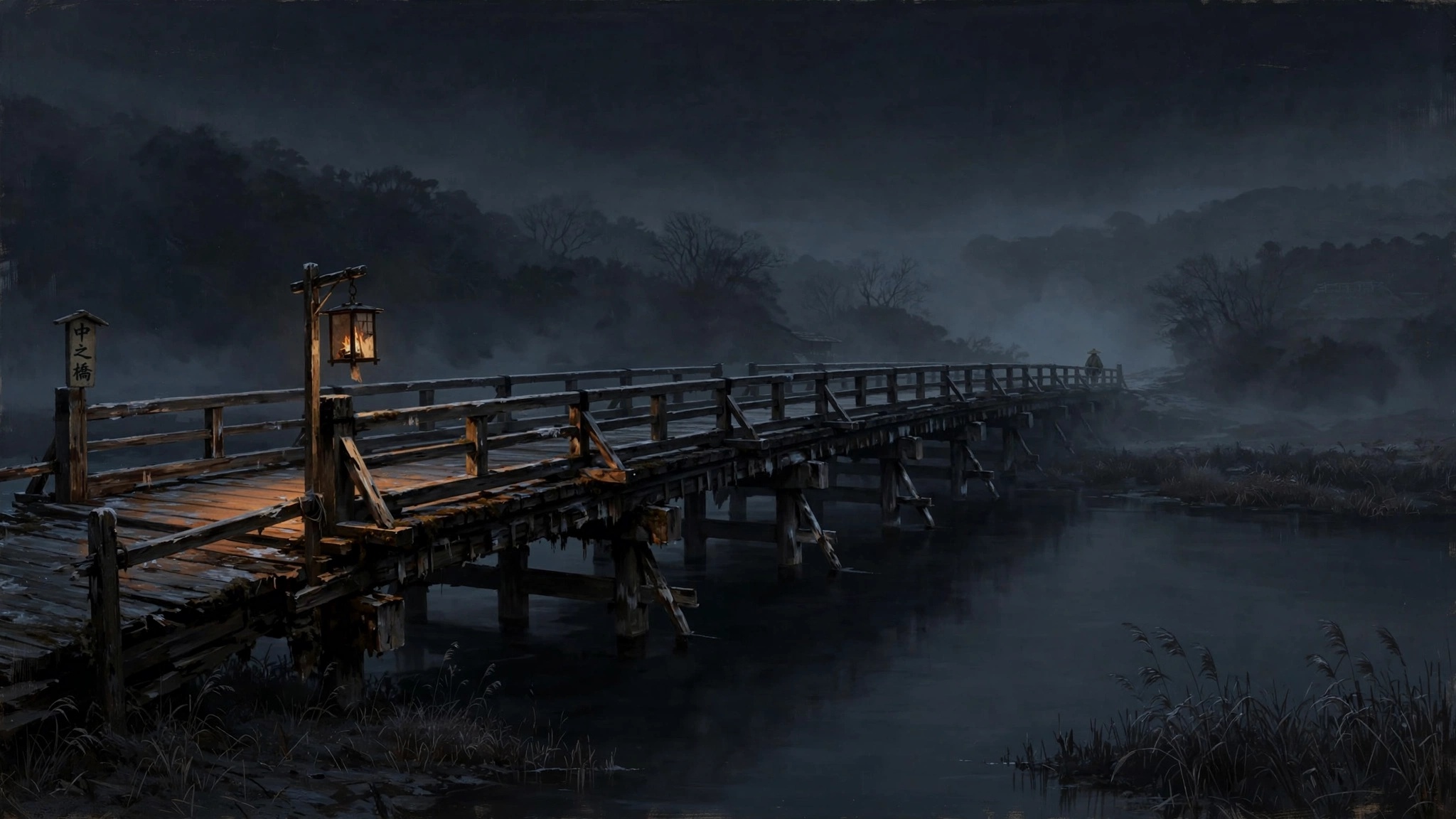
The lantern-keeper at Naka-no-hashi remembered the silence more than anything else. No current, no insects, no frogs calling from the reeds — just black water moving like oil, and a shape beneath it that had been waiting, patiently, for a man who walked exactly like Chūgorō.
The Lantern at Naka-no-hashi
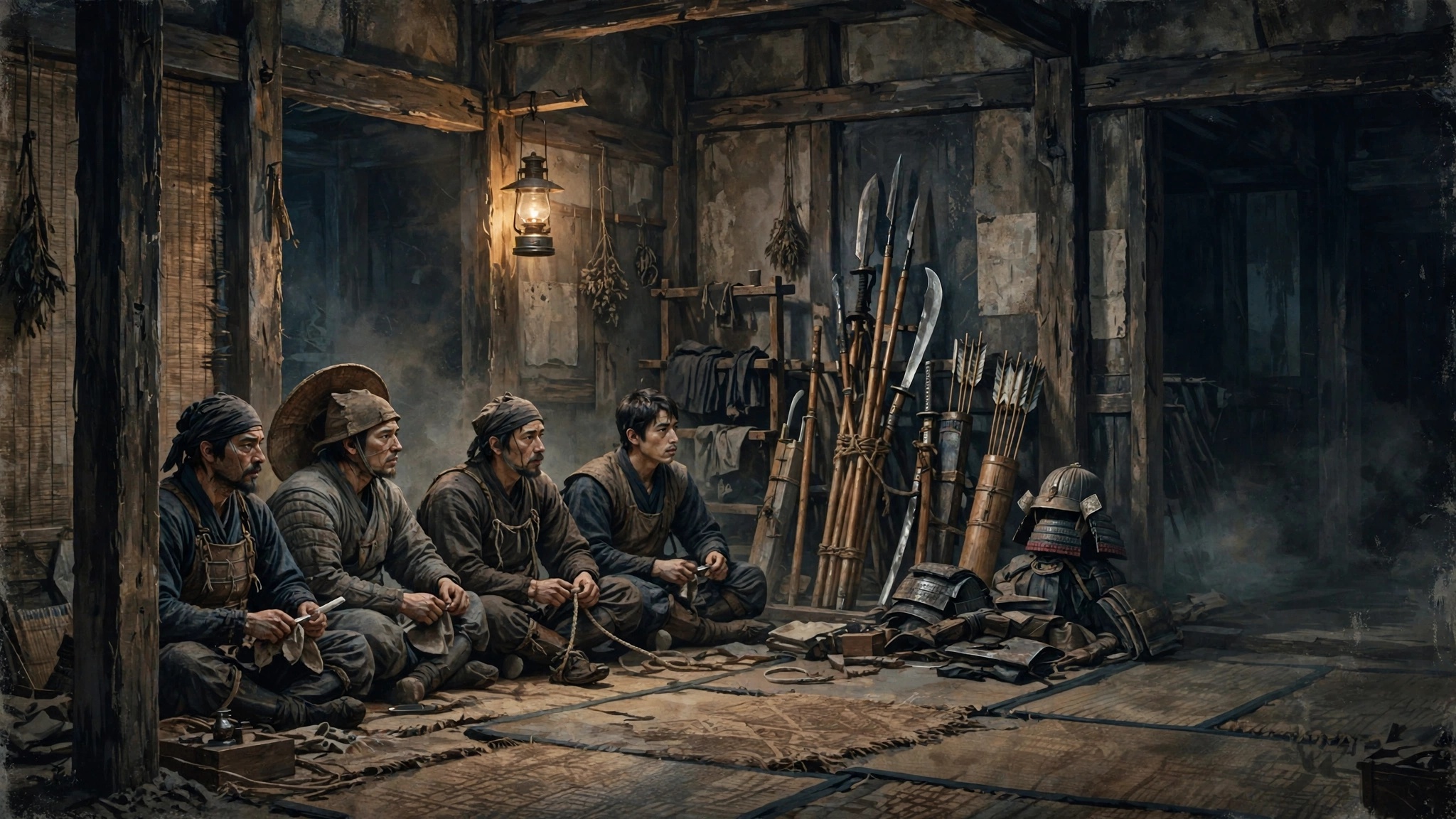 Comrades in Barracks.
Old Edo kept its rivers close, and its dread closer. The bridge called Naka-no-hashi — “the middle bridge” — crossed a quiet stretch of the Edogawa in the district of Koishikawa, where the modest residence of a hatamoto named Suzuki stood within walking distance of the water. Bannermen like Suzuki held middling rank in the shogunate’s service, neither grand nor obscure, and their households ran on the labor of foot soldiers, or ashigaru, the lowest rung of the samurai order. It was in this unremarkable household that Chūgorō served, and it was along this unremarkable riverbank that something found him.
This is the architecture of nearly every surviving kaidan from the Edo period: an ordinary servant, an ordinary bridge, an ordinary evening — and then the slow, deliberate arrival of something that does not belong to the daylight world at all. The old compilers of these tales were insistent on this groundedness. They wanted their readers to believe, each time, that the events had happened to someone real, in a place a reader could still walk to, and were not invented for the pleasure of the telling.
A Soldier Beyond Reproach
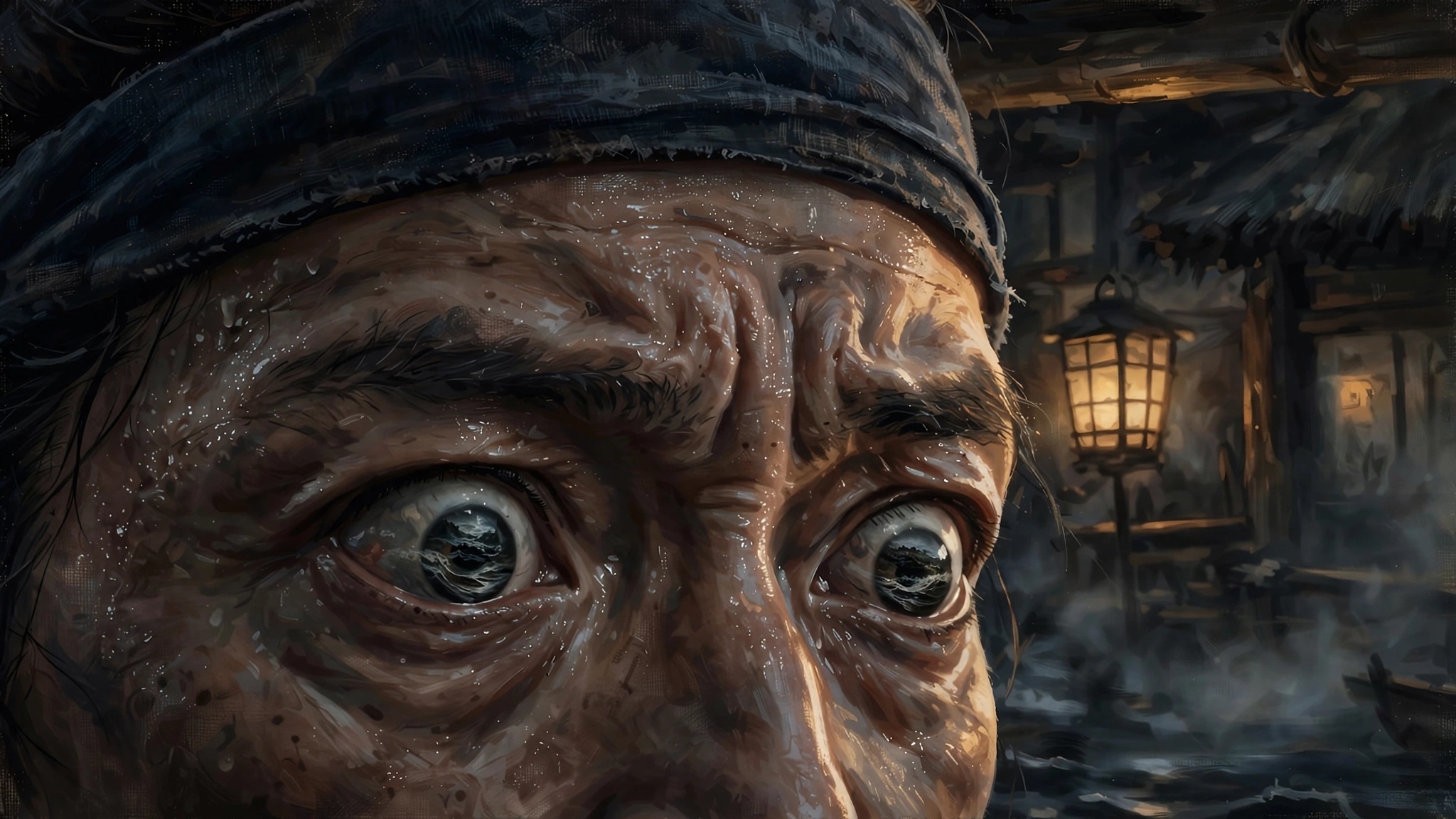 Fear in Chūgorō’s Eyes.
The record is careful, almost protective, in how it introduces Chūgorō. He was handsome, well-liked, clever, and without a single black mark against his service in years of duty. This detail is not incidental. It establishes, before the strangeness begins, that whatever happens to him cannot be read as punishment for vice or carelessness. He is not a cautionary figure. He is simply a man who crossed paths with something old and hungry, the way another man might catch a fever from standing too long in a cold wind.
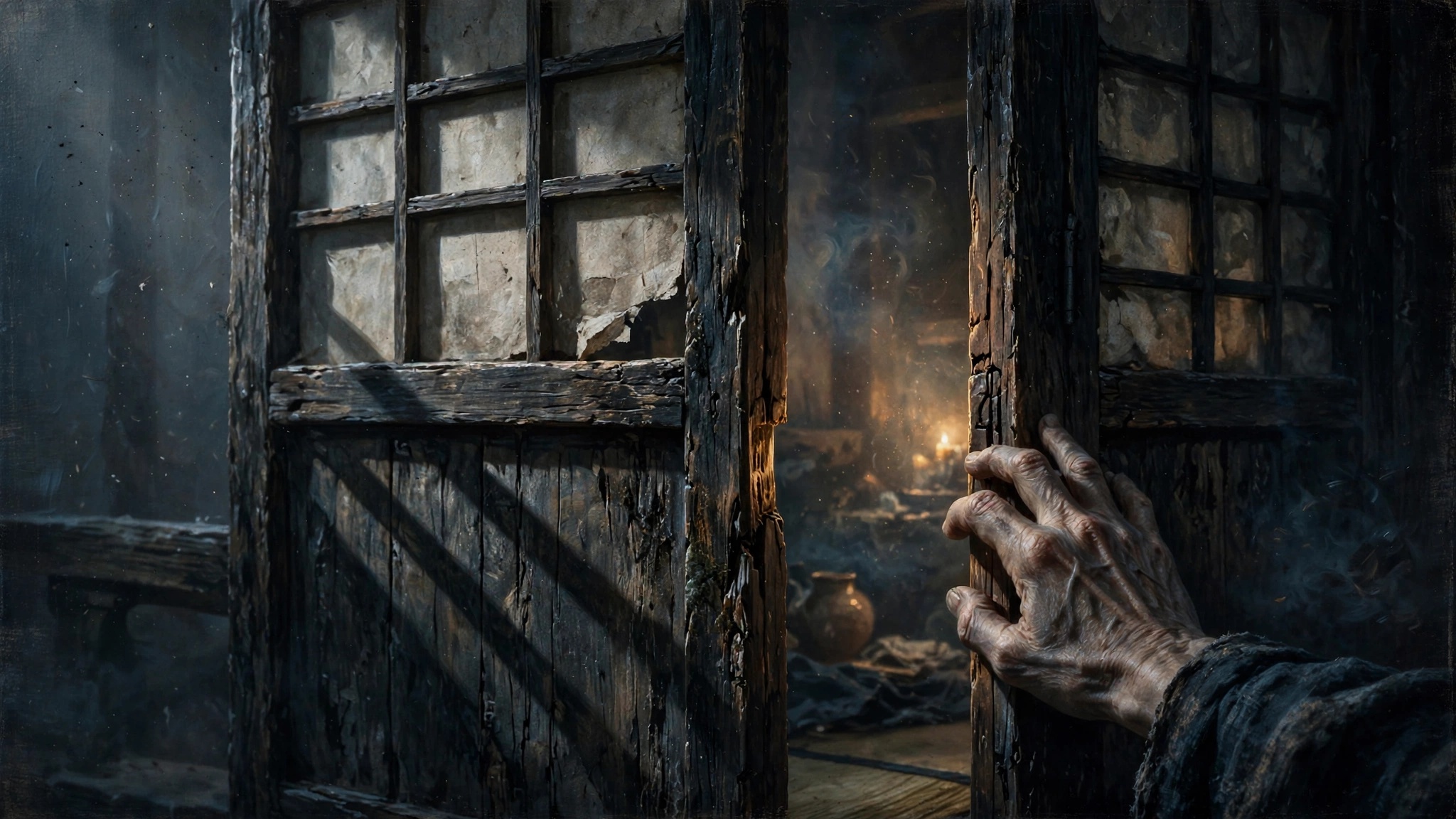
His comrades noticed the pattern before they understood it. Every night he slipped through the garden gate and did not return until the hour just before dawn. For weeks, no one spoke of it directly — Edo in spring was generous about a young man’s nocturnal business, and everyone assumed, reasonably, that a woman was involved. Duties were performed. Nothing seemed amiss. The silence of his comrades was, in its way, a kind of mercy that the story does not condemn.
What finally broke that silence was Chūgorō’s own body. He grew pale, then paler, the flesh drawing back from his face beneath the barracks lantern-light until his fellow soldiers could no longer tell themselves it was only love keeping him thin. What had looked romantic now looked like illness, and illness, among soldiers bound to one household, becomes everyone’s concern. An older retainer was chosen to confront him — not out of suspicion, but out of the kind of obligation that passes between men who have served side by side for years.
The Woman by the Gate
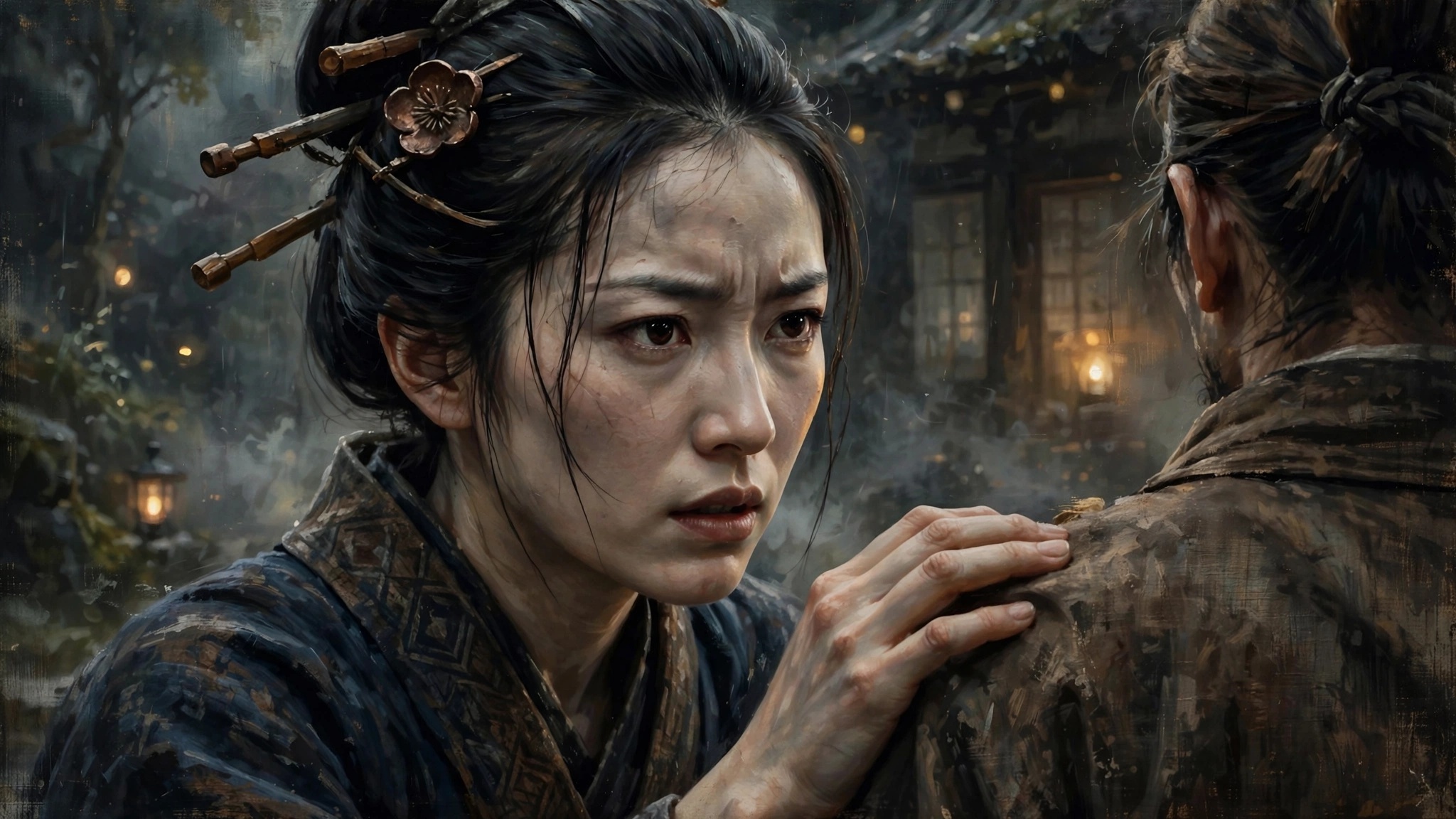 Whispered Secrets.
The confrontation, as preserved in the old sources, is formal and almost tender — the senior man weighing his words carefully before naming what everyone already feared. He told Chūgorō plainly that his absences were known, his health was failing visibly, and that without an explanation the matter would have to travel upward to the house officials. Chūgorō’s reaction was not defiance. It was relief, the specific relief of a man finally permitted to set down something too heavy to carry alone.
He asked only for secrecy, warning that if the story escaped the room, a great misfortune would fall on him. Then he told it. Five months earlier, returning from his parents’ house along the riverbank, he had seen a woman standing alone by the gate — too finely dressed, too still, for the hour. He meant to pass her in silence. She caught his sleeve before he could, and asked him to walk with her to the bridge, saying there was something she needed to tell him.
Her voice, he said, made resistance feel like cruelty. She told him she had watched him pass the Suzuki residence many times and had come to want him for a husband. Near the bridge she drew him toward the deep water — the part every local child was warned away from — and when the fear finally rose in him, it rose the way fear rises in a dream: too late, and without strength behind it. She took his wrist. With me you need not be afraid, she said, and stepped into the current, drawing him down with her.
The Palace Beneath the Water
What happened beneath the surface, Chūgorō could not say — no sight, no sound, no sensation. When awareness returned, he was walking beside her down a dry, brilliantly lit corridor, warm and very fine, in a hall large enough, by his estimate, to hold a thousand mats. Room opened into room, every one magnificent and empty, until they reached a great chamber where cushions were arranged as if for a banquet that no other guest would attend.
She knelt before him in the place of honor and asked if he would not be happy there, with her. He thought, in that moment, of Urashima Tarō — the fisherman of legend who followed a woman beneath the sea, found a palace there, and returned to his village to discover that centuries had passed in what felt to him like days. He wondered if she might be some spirit of that same order. He was too frightened to ask, and the feast — and the marriage vow of seven lifetimes that followed it — proceeded without his resistance.
Before dawn, she woke him with instructions rather than tenderness. The marriage, she said, had to remain secret; if daylight found him there, both their lives would be endangered. He was to return to his master’s house without resentment, and come back to the bridge at the same hour every night, where she would be waiting. Remember above everything, she told him, this marriage is a secret. If you tell anyone, we must be parted forever. He promised to obey — remembering, even as he said it, how that promise had gone for Urashima Tarō.
The Secret Unravels
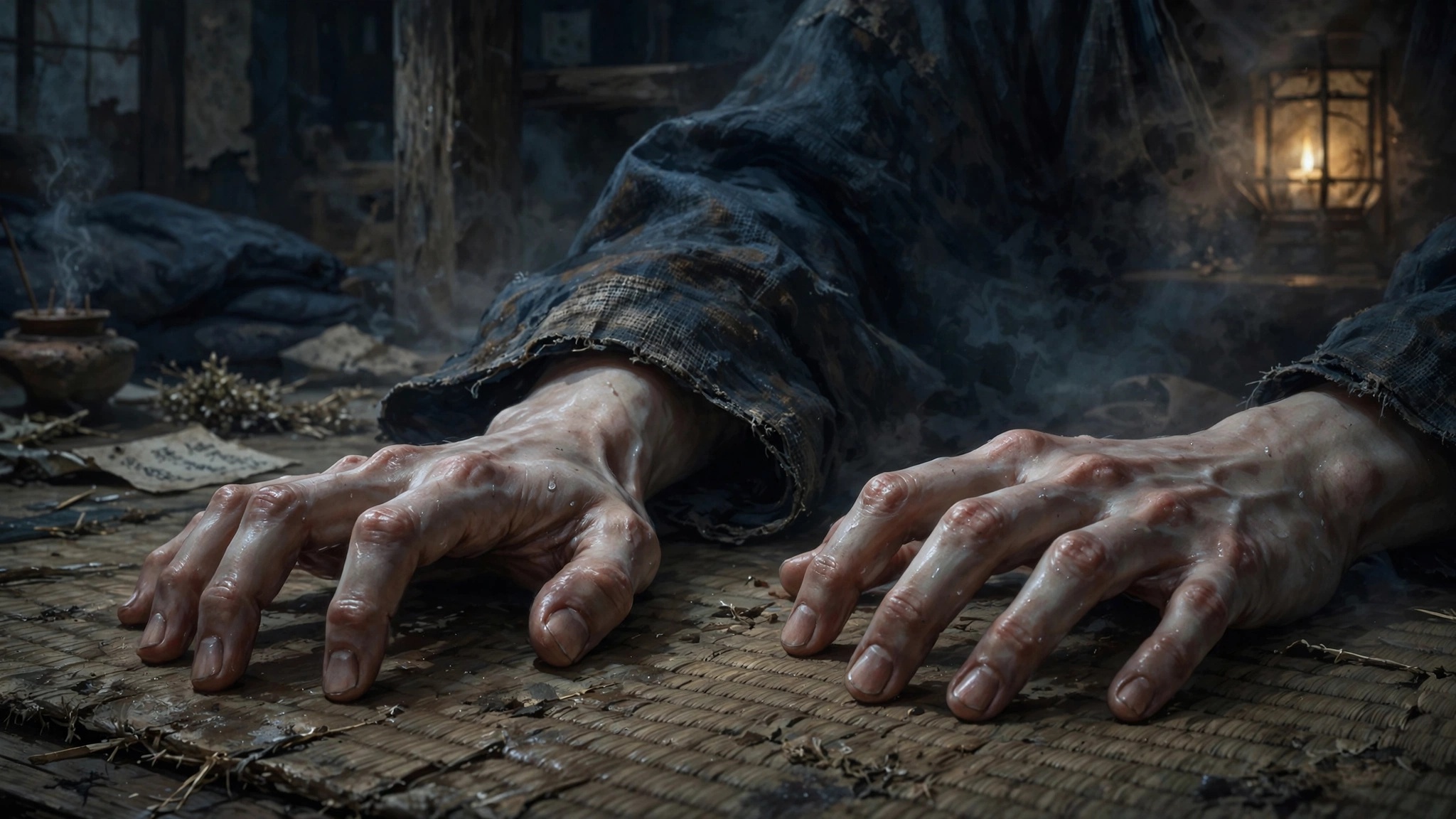 Shaking Collapse.
The old retainer listened to all of this with growing dread, and what disturbed him most was his certainty that Chūgorō believed every word of it. A liar could be reasoned with. A man genuinely ensnared could only be pitied, and perhaps warned. He promised to keep the confidence — for as long as Chūgorō lived to keep it with him — and sent him off that night with a warning rather than a scolding: be careful, I fear you may be deceived by something that does not wish you well.
Chūgorō returned hours later changed in a way that had nothing to do with injury. She had not come. For the first time in five months, the bridge had been empty, and he was certain, with a terrible finality, that she would not return. He blamed himself entirely — the broken promise, he said, was the greatest foolishness of his life. He collapsed where he stood, shaking from head to foot as though gripped by a chill with no source, and would not speak again.
By the dawn bell he could not rise. A physician trained in the old Chinese medical tradition was summoned and examined him a long while in silence before delivering his verdict: the young man had no blood left in his vessels — only water. Nothing done for him mattered. Chūgorō died at nightfall, and it was only afterward that the old retainer told the physician the entire story, from the gate to the final empty vigil at the bridge.
What Waited Beneath the Bridge
The physician’s response is the quiet center of the whole account. He was not surprised. No power on earth could have saved him once it had gone this far, he said. He is not the first young man to lose his life to that woman. When the retainer asked what she was — a fox-spirit, perhaps, in the tradition of the shapeshifting kitsune so common to Japanese folklore — the physician said no. When he asked if she might be some serpent or river dragon, the answer again was no.
Only a toad, the physician said. A very large, and very ugly, toad. The deflation of that answer is deliberate and unsettling in equal measure. The creature beneath Naka-no-hashi is given none of the glamour that usually accompanies seductive yōkai in the written tradition — no silk-robed fox, no dragon-king’s daughter. It is simply old, hungry, and patient, wearing beauty only as a lure, discarded the instant its purpose is served.
Historical Legacy & Archival Footnotes
Chugoro’s Tale: The Toad Beneath the Bridge survives through the broader current of Edo-period kaidan collection — the same literary impulse that produced Asai Ryōi’s Otogi Bōko (1666) and, later, Ueda Akinari’s Ugetsu Monogatari (1776), both of which insisted on grounding supernatural encounters in named places and plausible households rather than distant legend. Lafcadio Hearn’s later English-language retellings of Japanese ghost lore, compiled from oral and written sources at the turn of the twentieth century, carried this same evidentiary posture forward for Western readers, treating the water-spirits of old Edo with the same gravity as any historical record.
No shrine marks the spot today, and no second victim is named in the surviving account, though the physician’s words — he is not the first — leave the matter deliberately unresolved. The Edogawa has been dredged, straightened, and rebuilt around more times than any archive cares to count, and Naka-no-hashi, in some form, still crosses the same water. What the tale preserves is not a monster so much as a warning about secrecy itself: Chūgorō’s death follows not from the toad’s hunger alone, but from the broken vow, the confession that unmade the arrangement keeping him alive.
Read as Japanese folklore rather than simple horror, the story belongs to a recognizable Edo-period pattern — the seductive water-spirit, the forbidden marriage, the fatal cost of speech. It asks the reader to consider what we owe to the secrets we are given to carry, and what it costs when a promise, however impossible, is the only thing standing between a man and the dark.
Primary Texts & Scholarly References
- Asai Ryōi (1666), Otogi Bōko — foundational Edo-period kaidan anthology establishing the genre’s grounded, place-specific narrative style.
- Ueda Akinari (1776), Ugetsu Monogatari — classical collection of supernatural tales blending folklore with literary craft.
- Lafcadio Hearn (1904), Kwaidan: Stories and Studies of Strange Things — English-language compilation preserving oral kaidan traditions for later readers.
- Toriyama Sekien (1776), Gazu Hyakki Yagyō — illustrated bestiary cataloguing yōkai, useful for comparative classification of water-dwelling spirits.
- National Diet Library digital collections — archival holdings of Edo-period kaidan manuscripts and woodblock-printed ghost-tale compilations.
Soundtrack & Audio Credits
Music: ‘Die Statue OST’ by Kraosando (https://kraosando.bandcamp.com) — Licensed under CC BY 4.0