
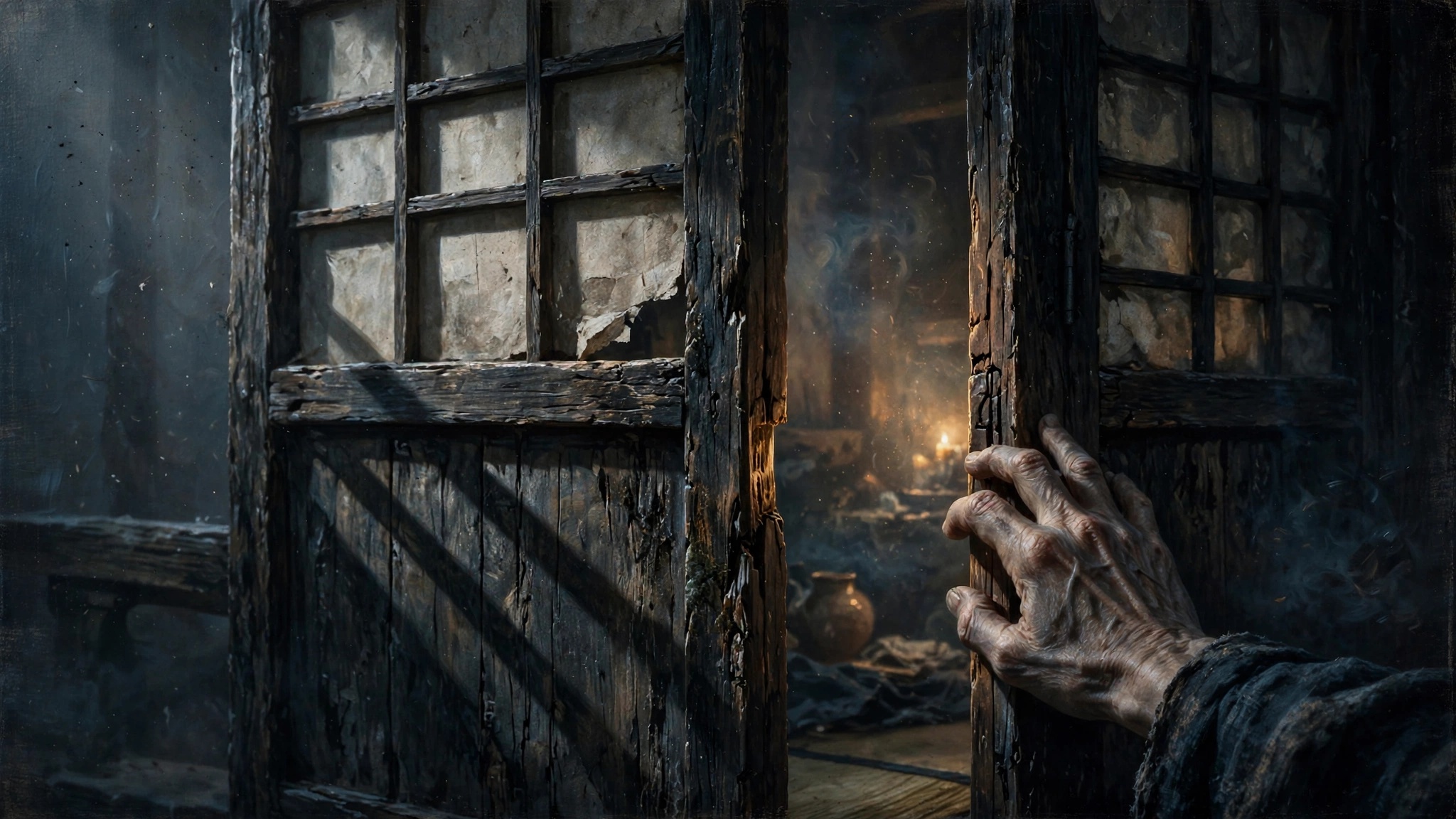
The paper panel slid open without a sound, and that absence of sound is where this particular kaidan earns its place in Japanese folklore. No creak, no catch — only the quiet discovery of five bodies breathing evenly beneath a lamp’s dim light, each one warm, each one headless, each one sealed at the neck as cleanly as a leaf parting from its stem. There is no blood in this story. That is precisely what makes it unbearable.
The tale of Rokurokubi: The Long-Necked Woman of Kai survives today chiefly through one English-language retelling, but its roots reach backward through centuries of continental and provincial record-keeping. What follows is not a retelling of the video’s narrative — you have already heard it — but an excavation of where it came from, who carried it, and what the Edo-period reading public believed they were looking at when they encountered a severed head still laughing in a forest clearing.
The Text Hearn Inherited
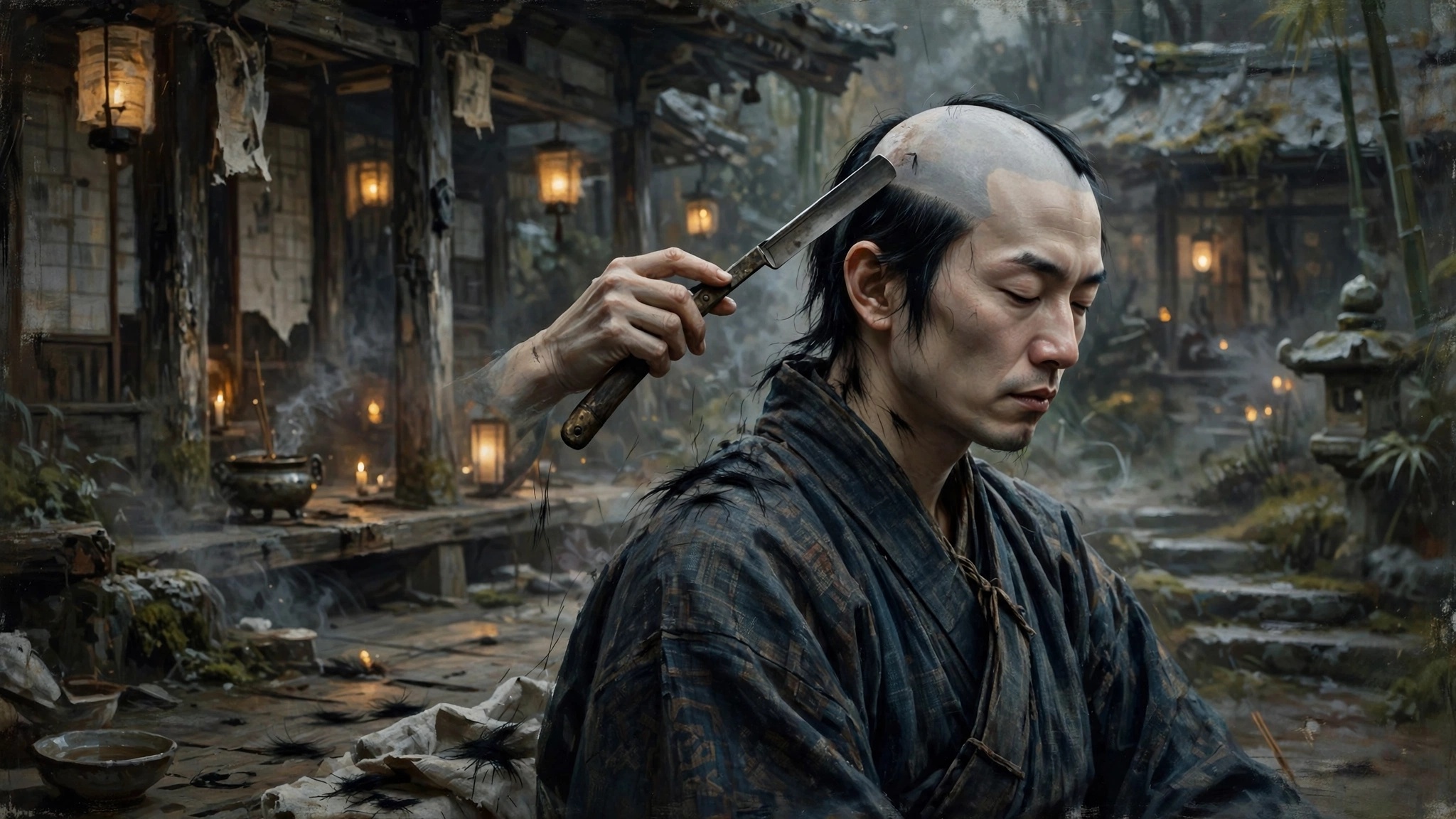 Shaving of the Head.
The version most readers know comes from Lafcadio Hearn, the Greek-Irish writer who settled in Japan, took the name Koizumi Yakumo, and in 1904 published Kwaidan: Stories and Studies of Strange Things — a collection that remains, more than a century later, the primary gateway through which Western readers meet Japanese ghost tradition. Hearn was careful, in his prefatory notes, to insist he was not inventing. He claimed only to be setting into English a story already old, one he traced to the mountains of Kai province during the Eikyō era, roughly 1429 to 1441.
That dating matters. The Eikyō period was a time of fractured loyalty across Japan, when provincial clans rose and fell with brutal speed — precisely the kind of unstable terrain that produces a masterless retainer with nowhere left to serve. Hearn’s account does not stand alone. It cites, within its own body, two older Chinese authorities: the Soushenji — literally a record of searching for spirits — and the Nanpō Ibutsushi, an account of strange things from the southern provinces. This layering is itself a feature of the genre.
A proper kaidan rarely claims originality; it claims inheritance, reaching backward for older evidence the way a frightened man reaches for a lantern already lit.
Why the Citation Chain Matters
Edo-period readers did not expect ghost stories to announce themselves as fiction. They expected documentation, however loose — a province named, an era specified, a prior text invoked. This habit descends from a long Japanese tradition of compiling strange occurrences as setsuwa, didactic or curious anecdotes presented with the weight of report rather than invention.
Whether the Soushenji and Nanpō Ibutsushi passages Hearn references describe this exact incident or merely the general rokurokubi phenomenon is, honestly, a question the surviving record does not settle. What they establish beyond doubt is that the long-necked woman of Kai was not Hearn’s invention. He found a belief already centuries deep.
A Swordsman Becomes a Priest
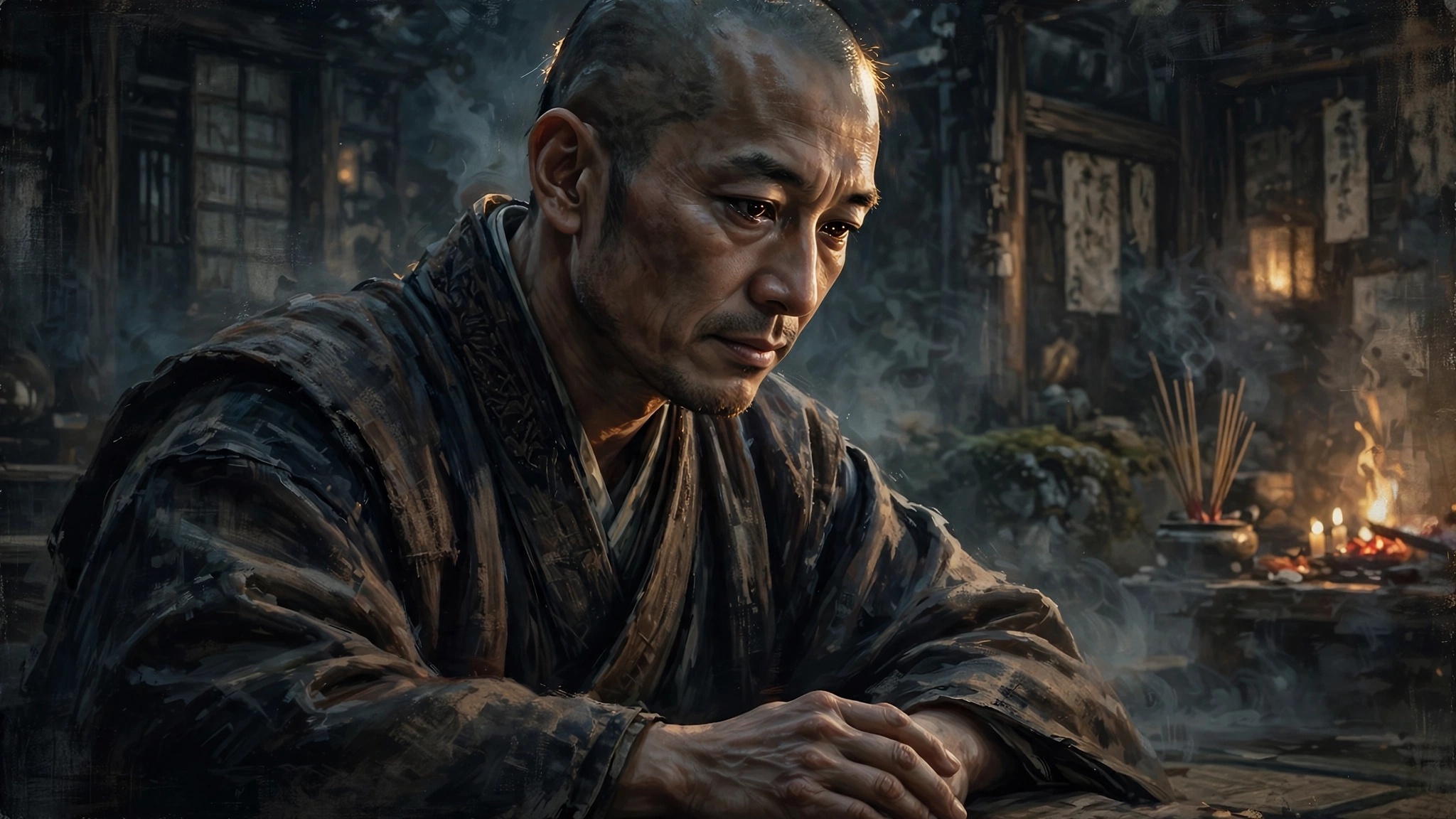 Priest’s Contemplative Gaze.
The monk at the center of the account was not born a monk. He is named, with unusual specificity for a folk tale, as Isogai Heidazaemon Takekazu, a retainer of the Kikuchi clan of Kyushu, a family whose inheritance was skill with bow, blade, and spear rather than land or title. The record states he surpassed his teachers while still a boy and fought with distinction through the Eikyō uprising — the same unrest that frames the story’s dating.
When the Kikuchi house collapsed, Takekazu faced a choice familiar to any ronin of the period: offer his sword to a new lord, or let the old loyalty consume the rest of his life. He chose the second path completely. He shaved his head, took the Buddhist name Kairyō, and became a wandering priest — though the account is careful to note that the soldier beneath the robe had not died. It had only changed its weapon, from steel to sutra.
This detail is not decoration. It explains everything that follows in the forest clearing, where an ordinary priest might have fled or prayed, and where Kairyō instead tore a sapling from the earth and fought five flying heads with a soldier’s economy of violence.
The Hut Below the Waterfall
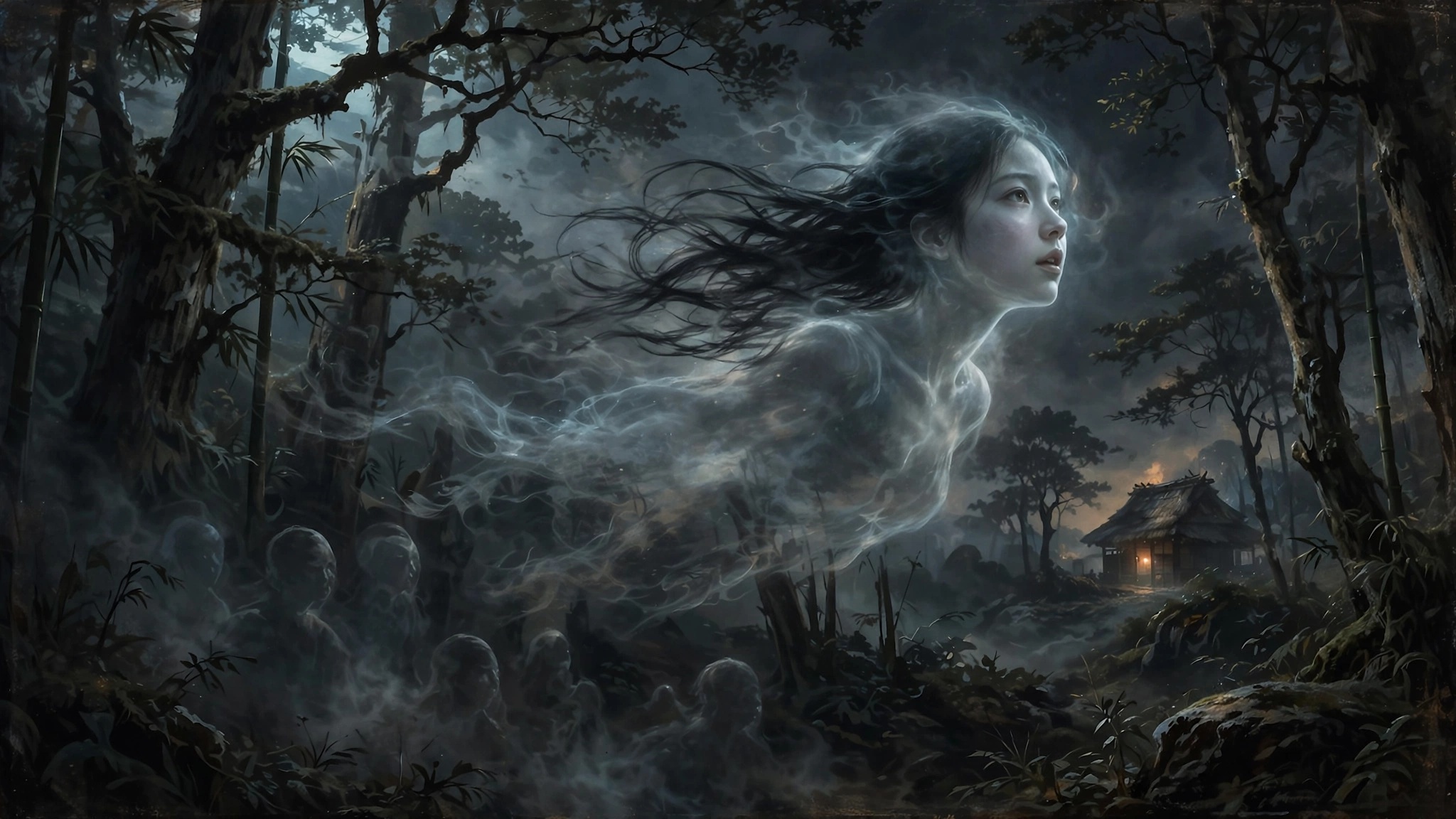 Head Flying Towards Hut.
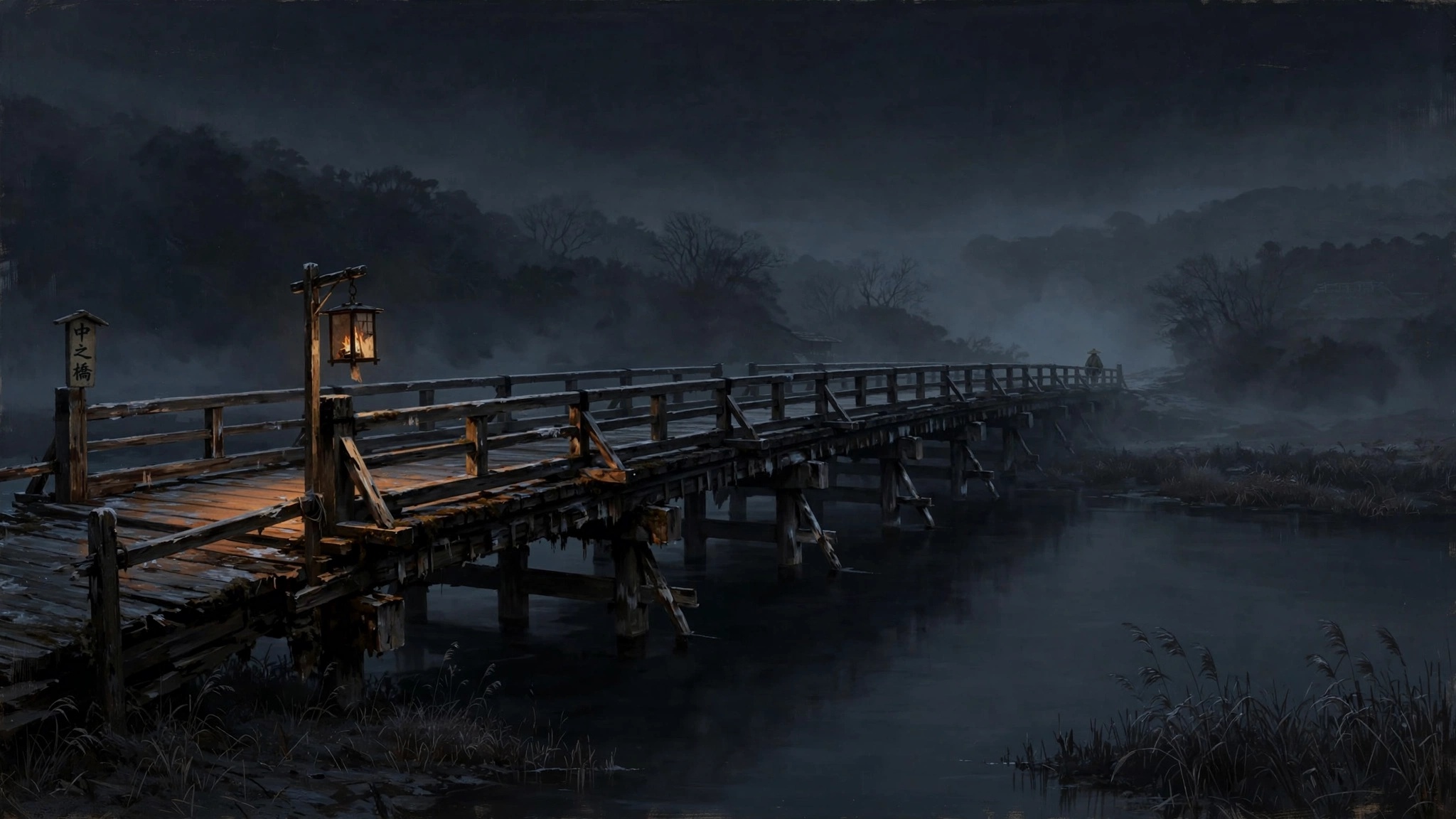
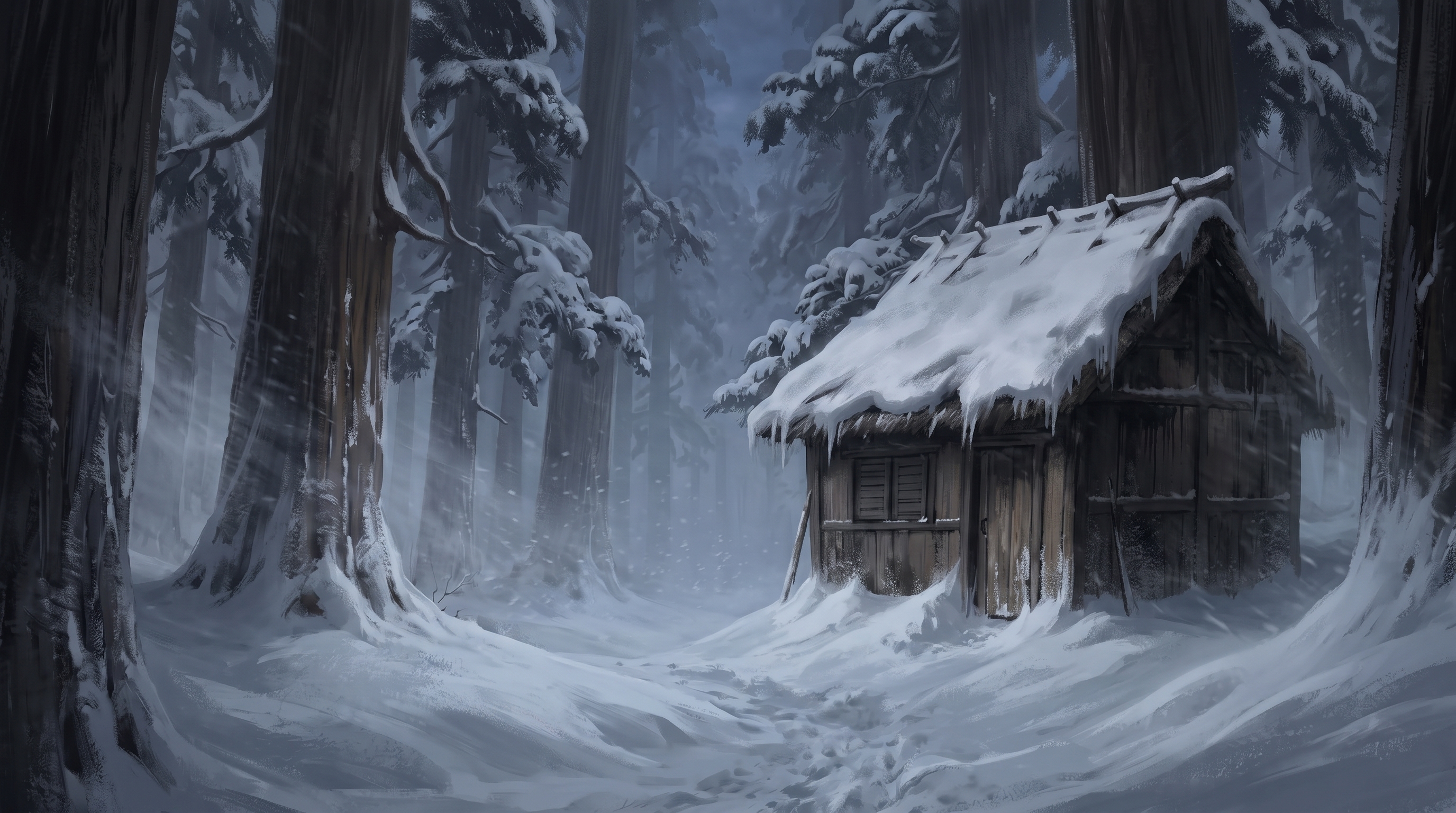
Kai province — now part of modern Yamanashi Prefecture — sits in mountainous terrain that has long supplied Japanese folklore with isolated settings: narrow passes, lonely shrines, huts positioned just far enough from any village to make rescue impossible. The woodcutter’s warning to Kairyō, that the region had its apparitions, many of them, functions as a formula common across kaidan literature — the local who knows better, the traveler who does not listen, the hospitality that turns out to be something else entirely.
The hut itself, fed by a bamboo water-pipe and shadowed by a waterfall catching moonlight “like a long white garment,” belongs to an aesthetic lineage running through Japanese supernatural writing more broadly — the uncanny disguised, at first, as simply beautiful. Ueda Akinari’s Ugetsu Monogatari (1776) relies on the same technique: a traveler welcomed into comfort that only later reveals its true, unsettling nature.
Whether the Kai hut tale directly influenced Akinari is interpretation, not established fact — but the shared grammar of hospitality-turned-horror is well documented across Edo-period ghost literature.
The Rule of the Rokurokubi
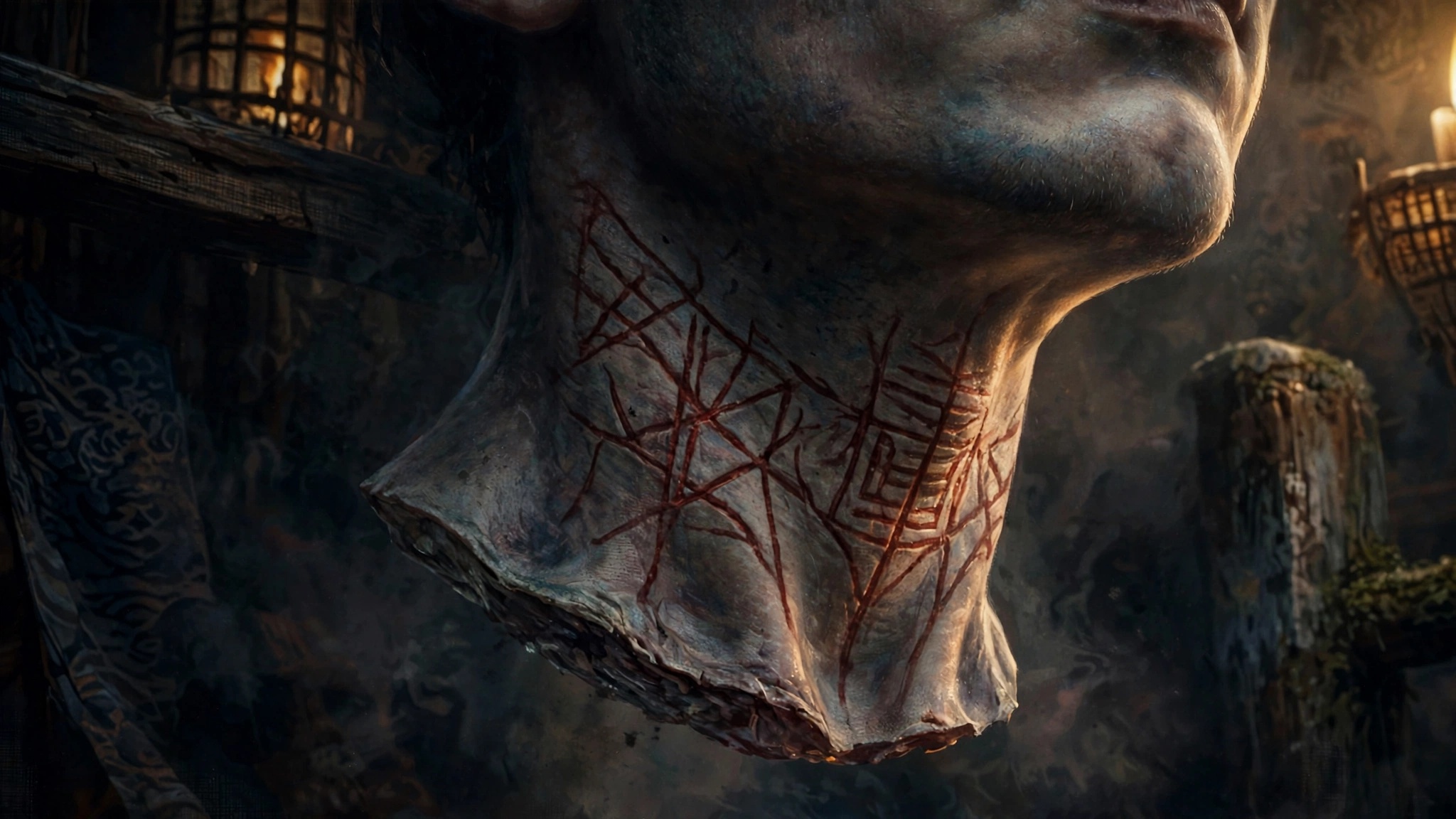 Strange Red Markings.
What distinguishes the rokurokubi from Japan’s many other wandering spirits is the specificity of its single governing law: if a sleeping body is moved while its head wanders free, the two can never be rejoined. The head returns, finds its anchor gone, and dies — striking the ground, the old accounts say, three times like a thrown ball before falling permanently still.
This is not an arbitrary embellishment. Folklorists studying the rokurokubi tradition generally identify two distinct subtypes recorded across Edo-period sources: one whose neck stretches unnaturally while the body remains attached, and another — the nukekubi, the type encountered here — whose head detaches entirely during sleep to roam and feed while the body lies vacant.
The artist Toriyama Sekien, whose illustrated bestiaries catalogued dozens of yōkai in the eighteenth century, depicted long-necked women among his supernatural taxonomies, reflecting how deeply the figure had embedded itself in popular visual imagination by the mid-Edo period.
The Marking That Proved the Truth
The old magistrate in Suwa who examines the severed head finds, around its base, a pattern of red markings — identified, within the story’s own internal logic, as the signature the Nanpō Ibutsushi assigns specifically to a true rokurokubi. The neck’s edge shows no blade mark at all, only the smooth parting of something that was never attached by flesh in any ordinary sense.
This detail performs real narrative work: it transforms Kairyō’s account from madman’s confession into verified report, precisely the kind of physical evidence an Edo-period audience would expect before granting a ghost story credibility.
Historical Legacy & Archival Footnotes
The rokurokubi of Kai endures today almost entirely through Hearn’s 1904 rendering, though the belief itself long predates him, embedded in regional Kai folklore and the older Chinese catalogues it cites. No contemporary fifteenth-century manuscript of the Isogai Heidazaemon episode has surfaced in major archival collections; the tale survives the way most kaidan survive — through retelling, compilation, and the occasional named source rather than an unbroken documentary chain. This is not a weakness unique to this story. It is the ordinary condition of oral tradition crystallizing into print centuries after the events it claims to report.
What makes this particular tale persist is its structure rather than its proof. A ronin-turned-priest, loyal past the point of reason, confronts a horror that cannot be fought with faith alone — only with the soldier’s instinct he supposedly abandoned. The magistrates’ courtroom scene, where disbelief curdles into recognition once Isogai’s old name is spoken, mirrors a recurring Edo-period anxiety: that the masterless warrior, stripped of rank, might still carry more authority than the men now seated in judgment over him.
The grave the bandit digs at the story’s close — “the grave of the rokurokubi,” standing somewhere in the forest behind a hut that no longer exists — is presented by the old telling as a persisting landmark. No version of the account, Hearn’s included, claims to have actually located it. That uncertainty is, perhaps, the most honest detail in the entire record.
A mound without coordinates, a hut that vanished between one telling and the next, a head bought for five ryō and a change of clothes — these are the kinds of loose threads that let a kaidan keep breathing centuries after its first telling. The tale remains neither confirmed nor disproven, only carried forward, the way Kairyō carried that severed head down the road to Suwa.
Primary Texts & Scholarly References
- Lafcadio Hearn (Koizumi Yakumo) (1904), Kwaidan: Stories and Studies of Strange Things
- Ueda Akinari (1776), Ugetsu Monogatari
- Toriyama Sekien (1776), Gazu Hyakki Yagyō, illustrated yōkai compendium
- Referenced within Hearn’s text: the Soushenji (Chinese spirit-record tradition) and the Nanpō Ibutsushi (Account of Strange Things from the Southern Provinces)
- National Diet Library digital collections, Edo-period setsuwa and kaidan compilations
- Regional folklore records of Kai province (modern Yamanashi Prefecture), as summarized in later Japanese folklore scholarship on rokurokubi and nukekubi traditions
Soundtrack & Audio Credits
Music: ‘Candle Light’ by Kraosando (https://kraosando.bandcamp.com) — Licensed under CC BY 4.0