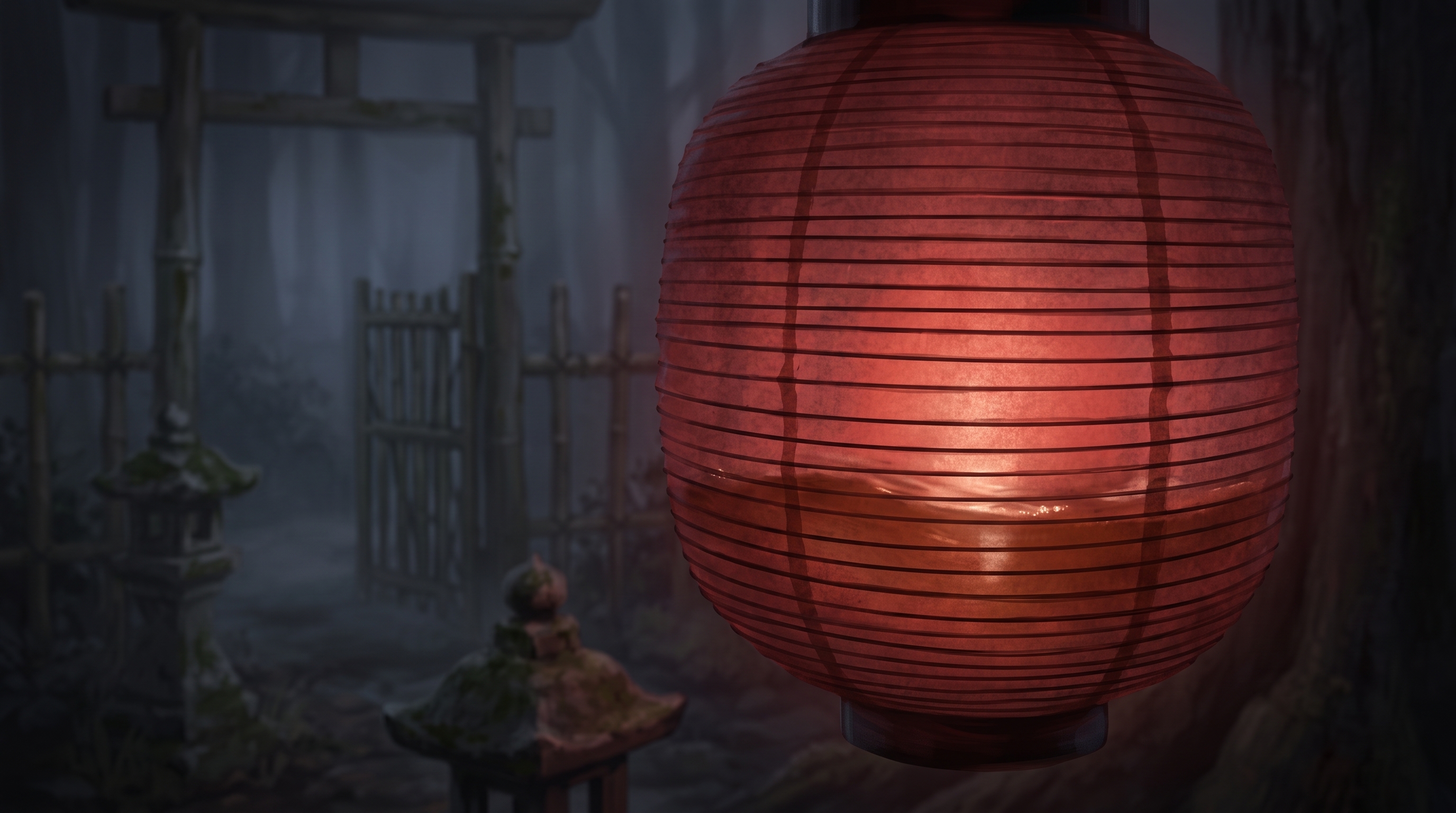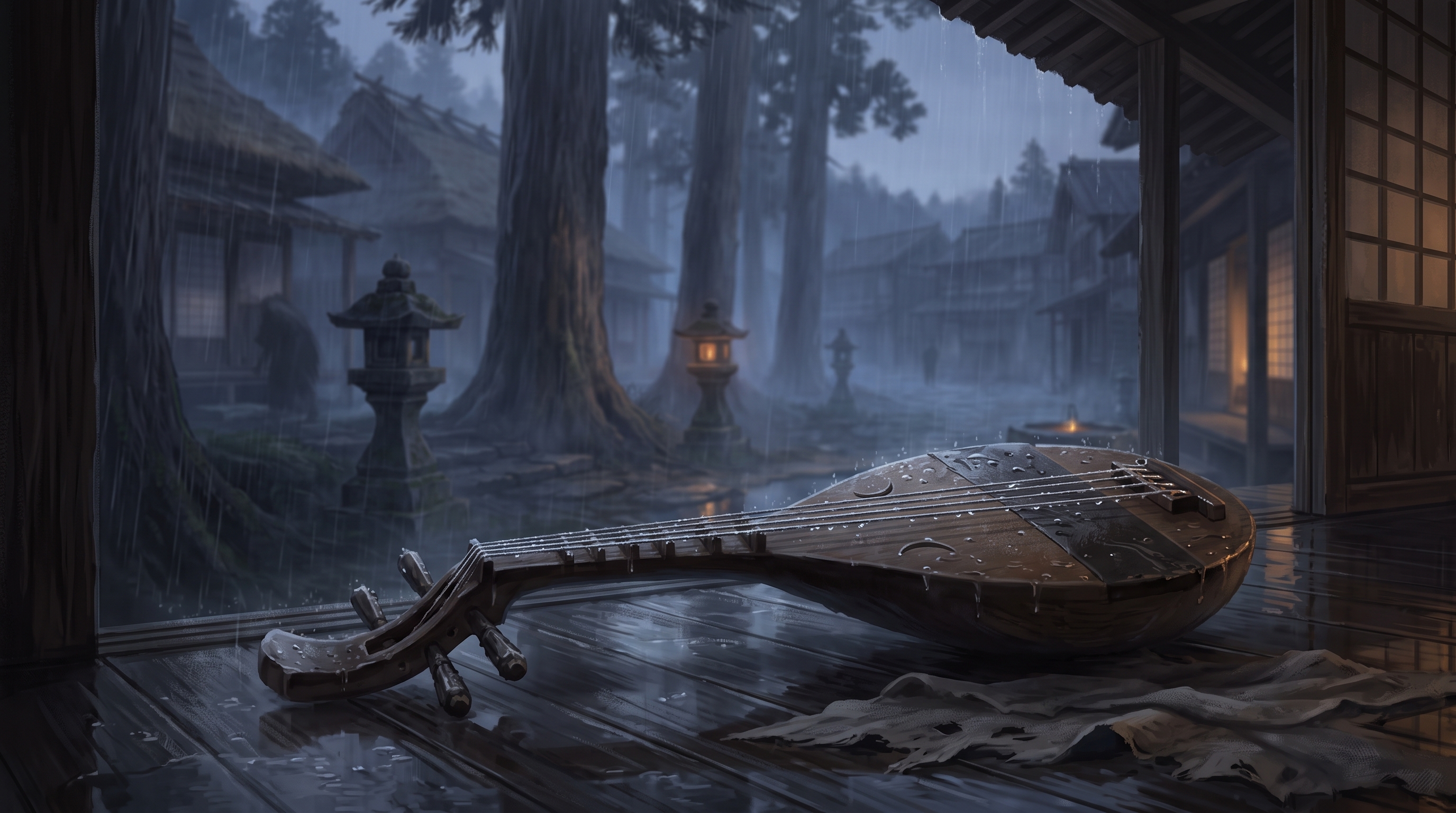


The fog came down the Azusa valley like something poured, not something drifting, and it did not lift when the hour told him it should. A man with a watch and a tin of corned beef and a small fire looked into the round glass face of that watch and saw, in its reflection, something looking back at him from the rock behind his shoulder. That is where this story begins, and it begins with a patient.
The Patient in Room Twenty-Three
 The Watcher in the Glass.
The account that follows is recorded, almost word for word, from the testimony of Patient Number Twenty-Three, held at a psychiatric hospital on the outskirts of Tokyo in the early years of the Shōwa period. The document survives as Kappa, published under the name of Ryūnosuke Akutagawa in 1927, and it is framed — deliberately, insistently — not as fiction but as a transcription. A visitor sits across from the patient in a room with barred windows and one bare oak tree outside. The patient is younger-looking than his years. He tells his story calmly, almost formally, gesturing when the telling excites him, and at the very end of it — every time, according to the hospital’s own director — he rises from his chair and begins shouting at whoever is in the room to leave. The hospital’s record does not explain why. Neither, for now, will this one.
What makes the account unusual is not the sighting. Sightings of kappa fill the old records — the Suikokōryaku, compiled generations earlier, catalogues them like a naturalist cataloguing moths, listing where they were seen, what they ate, which villages had to be repaved with cucumber offerings to keep them appeased. What makes Akutagawa’s account unusual is its claim of residence. The patient does not say he glimpsed a kappa at the water’s edge. He says he lived among them, for the better part of a year, as a documented citizen of their country, with a name, a house, a physician, and — before the end — a diagnosis.
The Fall and the Country Beyond
 The Streets of Kunigawa.
He fell. That is the first thing the record insists upon. Chasing the creature through the bamboo at the edge of the Azusa, he lost his footing at the mouth of a hole he had not seen, and the fall ended not in the river but in darkness, and the darkness ended with him lying on his back, surrounded.
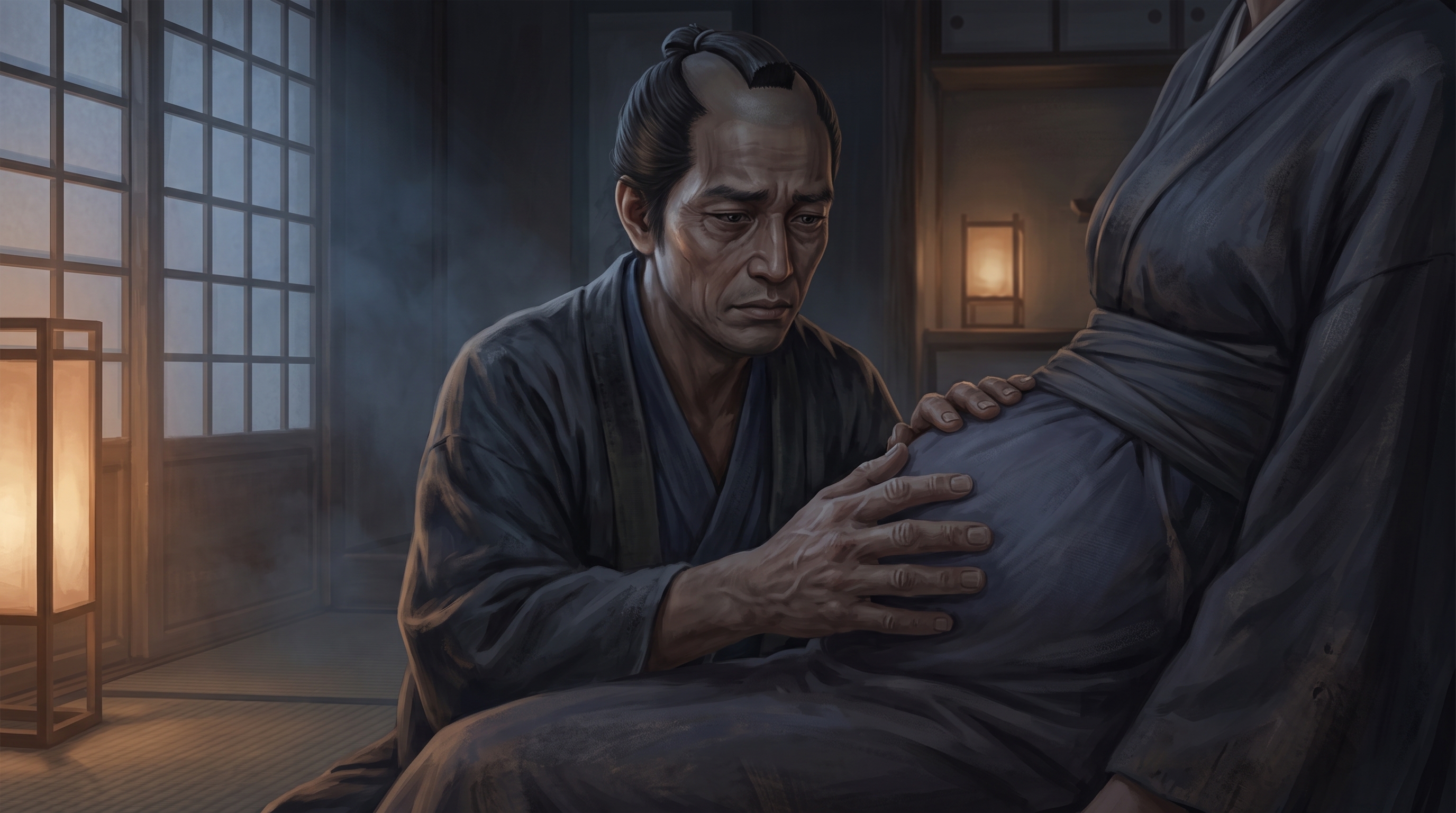
The physician who examined him first was a kappa named Chak, spectacles balanced on a beak, stethoscope pressed to a human chest that had no business being where it was. The patient was carried on a litter through streets that resembled, by his own account, the Ginza — plane trees, storefronts, motorcars — except that every face along the way belonged to something that should not have had a face at all. He was housed as a “specially protected resident,” a legal category the record notes, extended to the rare human who falls into the country and cannot be sent home. His neighbor was the fisherman who had first fled from him, a kappa named Bag, who visited three times a week and who explained, without embarrassment, that kappa know a great deal more about humans than humans know about kappa — because it is kappa, far more often than the reverse, who do the catching.
The country itself is called kunigawa, the land of the river spirits. The geography is uncanny on purpose. There are cities, hospitals, concert halls, factories, restaurants, and temples. There is a class system. There is a stock exchange. There is a working press and a constabulary. Akutagawa is not describing a fairy-tale fairyland — he is describing a modern industrial society, staffed by beings with beaks and shallow skull-dishes, and the resemblance to Shōwa-era Japan is the entire point of the exercise.
A Society That Should Not Be
 The Temple of Living.
The patient spent his first weeks learning the language, the customs, the small horrors folded so casually into ordinary life that no one around him thought to name them as horrors. He describes the kappa habit of changing skin color to match their surroundings — grey on stone, green in grass — a detail he connects, in his testimony, to an older piece of folklore: that the kappa of the western provinces are said to run green, and the kappa of the northeast run red. He describes their nakedness, unembarrassed, and their bewilderment at his own modesty. He describes, with more unease than either of these, the custom surrounding birth.
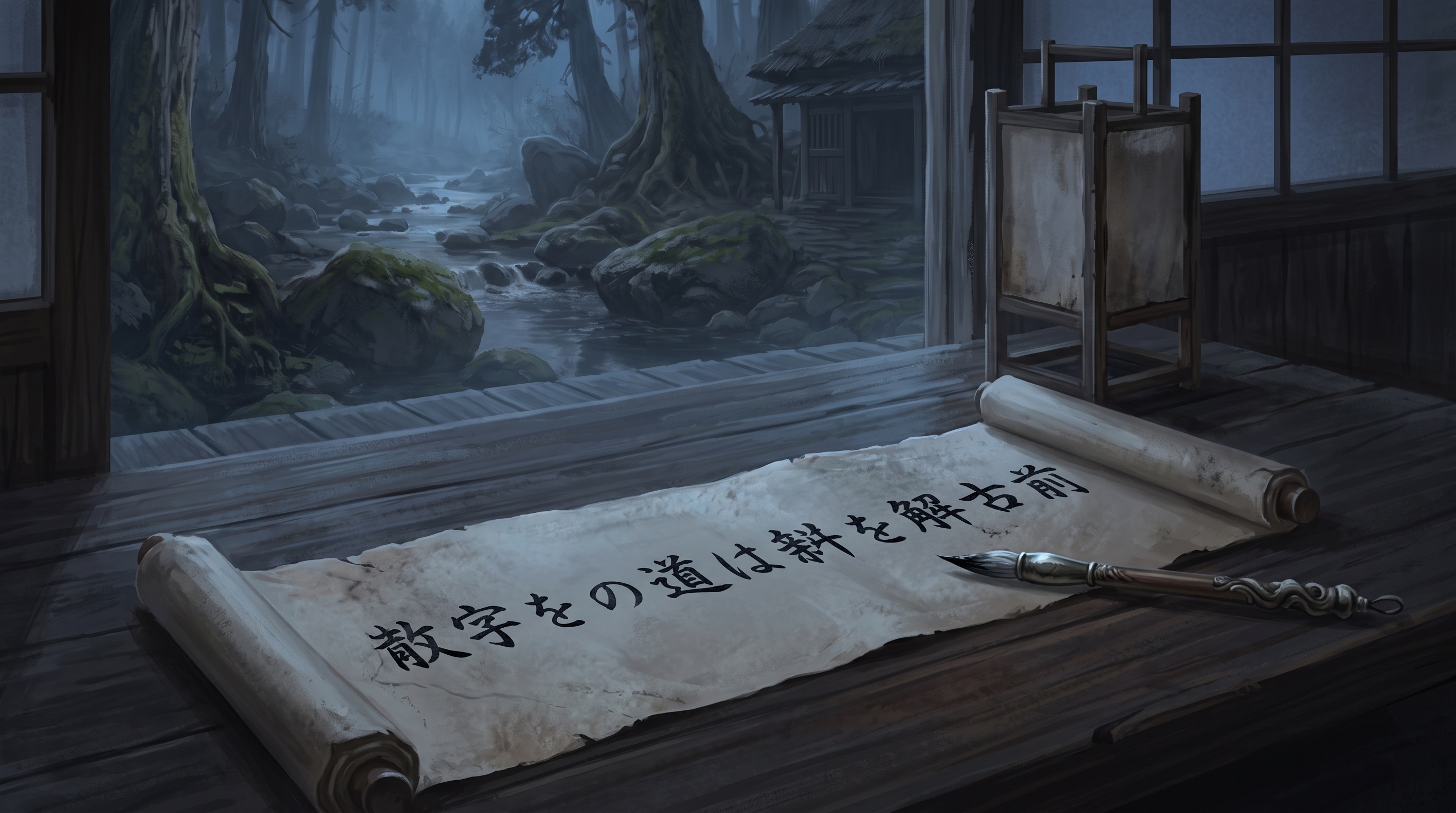
Before a kappa child is born, the father kneels and speaks directly into the mother’s body, asking the unborn thing whether it wishes to be born at all, and whether it has considered its inheritance carefully. The child, in the case the patient witnessed, answered that it did not wish to be born — that its father’s line carried madness, and that it did not believe, in any case, that kappa existence was good. The father accepted this. A doctor administered an injection. The mother’s belly went flat, like a punctured balloon, and nothing more was said.
He befriended a poet named Tok, who lived without a wife by principle, who despised the family structure of his own people as a cruelty dressed up as duty, and who belonged to something called the Superman Club, where artists gathered to prove, loudly and often, that they had transcended ordinary morality. He befriended a composer named Craback, tortured by comparison to a rival he had never spoken to. He befriended a capitalist named Gael, who explained, over coffee stirred with a solid gold spoon, that laborers made redundant by machinery were not left to starve — they were gassed, quietly, and sold as meat, and that Gael himself had once offered the patient a sandwich made from exactly this, with no more weight in his voice than a man offering salt.
He watched, at a concert hall, a policeman halt a pianist mid-performance for the crime of “playing an indecent melody” that no deaf officer could possibly have heard — a law, a philosopher named Mag explained, built precisely around the fact that music alone escapes censorship elsewhere, because sound leaves no image behind for the eye to judge.
He visited a temple the size of ten cathedrals, its aisles lined with marble busts of the country’s saints — Strindberg, Nietzsche, Tolstoy, Kunikida Doppo, Wagner — men the kappa clergy claimed for their own religion of pure appetite, a faith called simply Living, whose commandment was to eat, to mate, to live with force, and whose old priest confessed, in a private room beneath a black statue of Venus, that even he could not manage to believe in the god he served.
The Death of Tok, and What Followed
 The Empty Chair.
It was Tok who broke first.
He had not eaten well in weeks. He had stopped sleeping. On an ordinary afternoon, in the middle of an ordinary conversation about the philosophy of art, a single pistol shot came through the wall of the house next door — his own house — and by the time the others arrived, Tok was lying among his mountain flowers with the crown of his skull opened, a line of poetry left behind on his desk, borrowed, the philosopher Mag noted with something close to gentleness, from Goethe’s Mignon.
His mistress wept over the body. His friends argued, almost immediately, about the arrangements. And within days — this detail the patient insists on, though no one who hears it can quite believe he means it plainly — Tok’s house had become a photography studio, and every photograph taken inside it, without exception, developed with a faint second shape standing behind the sitter, unmistakably him.
The Society for Psychical Research sent seventeen members and a medium to sit at a round table in that studio. The transcript of their session survives inside the patient’s own account, question and answer, formal as a deposition. Asked whether he regretted his death, the voice that came through the medium answered that he did not — that should he grow weary of the spirit world, he would simply take up a pistol again. Asked about an old Japanese poet he claimed to have met among the dead, he recited a haiku about a frog leaping into an old pond, and added, without irony, that the line would have shone brighter still if the word had been kappa.
The patient laughed when he first read that line. He does not laugh when he tells it now.
The Door in the Ceiling
He found, eventually, the one door left open in the whole country — an old, colorless kappa, born white-haired and growing younger every year, who kept a rope ladder coiled beneath a trapdoor in the ceiling of his house, leading up through cedar branches to a circle of ordinary sky. The old one warned him, once, plainly: do not regret it, once you have gone back up. The patient said he would not. He climbed.
He returned to his own country smelling, for months, the strangeness of human skin, flinching at human noses the way a man flinches at an insect he has only just learned to see. A year later a business failure took something out of him that the fall down the mountainside had not, and what came back into its place was the wish — not to visit the kappa country again, but to go home to it. He was stopped at a train station before he could board. He has been in the hospital since.
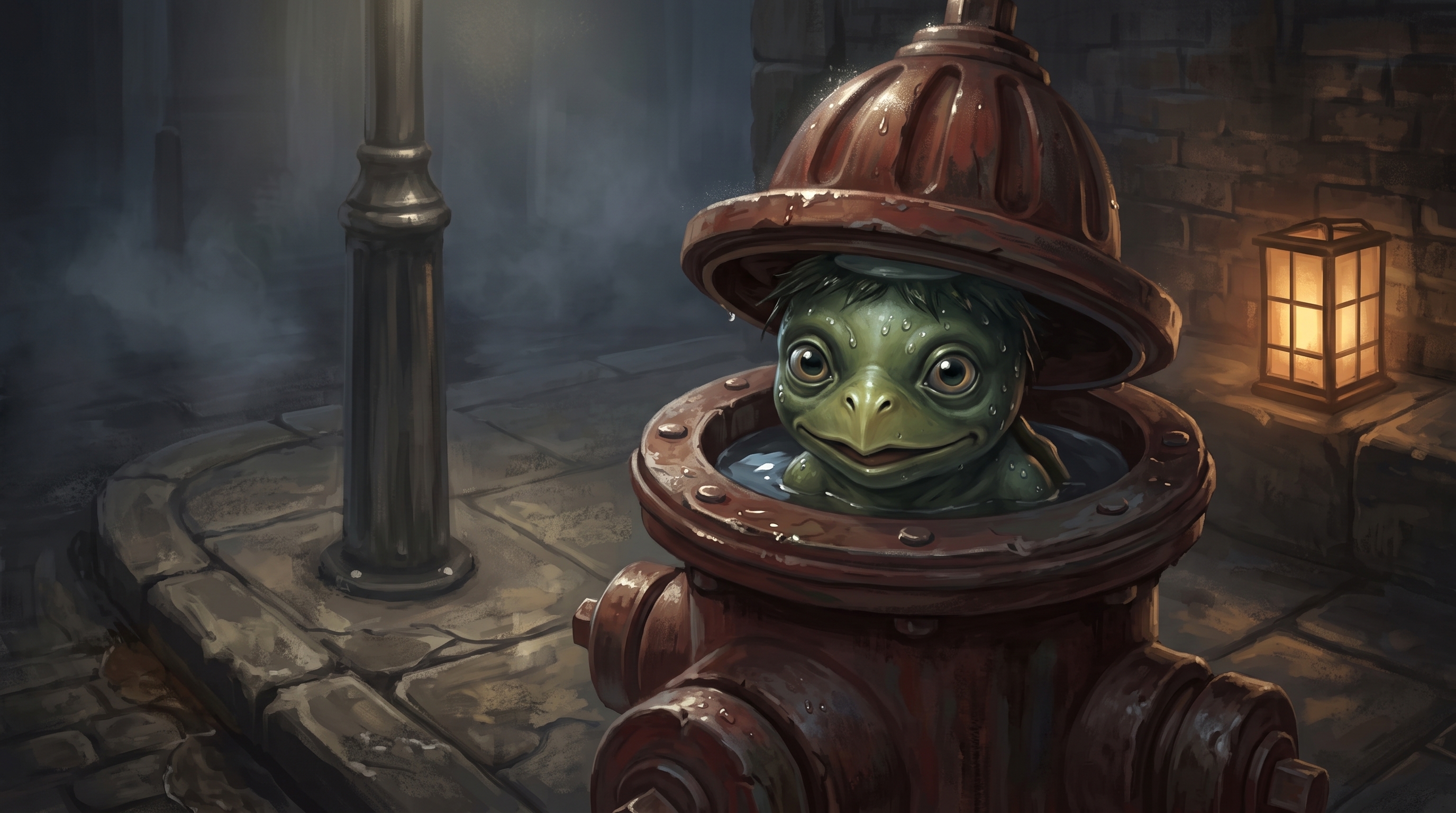
He says the fisherman Bag still visits, having learned from a radio broadcast that his old friend was ill, traveling up through the city’s water mains and out through an unlocked fire hydrant. He says the composer Craback once played him a violin piece by moonlight. He says the philosopher Mag brought him a book of Tok’s collected poems, which he reads aloud from an old telephone directory, because no other book is in his hands.
He says the judge Pep, dismissed from his post, has gone mad, and is now a patient himself, somewhere on the other side of the door he once fell through.
Why Patient Twenty-Three Never Recovered
He does not say whether he believes any of it happened, and no one in that room ever asks him to. The visitor who transcribed the account remembers only the patient’s face at the very end of the telling — the sudden rise from the chair, the fist already closing, the voice already climbing toward something that was no longer testimony.
“Get out. You scoundrel. You stupid, jealous, filthy, shameless, conceited, cruel, self-satisfied animal. Get out.”
The oak tree outside the barred window kept no leaves that winter, and the record does not say whether he was shouting at the visitor, at the hospital, at the species waiting on the other side of the glass — or at something still standing, patiently, just behind his own reflection.
What This Story Is Doing
Read straight, Kappa is a satirical novel of manners: Akutagawa turns a distorting mirror on the Shōwa-era Japanese establishment — its bureaucracy, its industrial hunger, its moral pretensions — by relocating it downstream, into a country whose citizens have beaks and skull-dishes. The book was almost immediately controversial on its 1927 publication for the second half alone, in which Tok’s suicide is described with such clinical tenderness that the authorities briefly considered suppressing it, and Akutagawa himself — already ill with the depression that would kill him by suicide in 1927, the year of the book’s publication — spent the last months of his life trying to explain the book to interviewers who insisted on asking whether he had, in fact, descended into the country of the kappa.
Read for the kappa themselves, the novella is a quiet act of historical preservation. The Suikokōryaku, the Edo-era bestiary that catalogues every river-spirit variant in the Japanese archipelago, treats the kappa as a living ecological fact: which prefectures host which color, which villages have had to repave their streets, which children have been taken and which returned, cucumber-bowl intact on the crown of the skull. Akutagawa does not invent his kappa. He moves them from the encyclopedia into the modern novel, and by doing so, preserves them in the only form that survives the Meiji period intact.
Read for the patient, the novella is something else. The closer you look at the account, the less it resolves as satire or as folklore and the more it reads as a record of a man who has seen something real, can prove none of it, and is being slowly destroyed by the gap between the two. The hospital’s director is a witness who, by the end of the telling, has become an accomplice. The visitor is no better. The reader is no better.
The kappa, by the end, are not the unsettling part. The unsettling part is that the patient’s loneliness, after a year in their country, is less than his loneliness back in his own.
Primary Texts & Scholarly References
- Akutagawa Ryūnosuke (1927), Kappa — the source text. Originally serialized in the magazine Bungei Shunjū before book publication; the present account draws from the canonical Kawade Shobō edition.
- Toriyama Sekien (1776), Gazu Hyakki Yagyō — the woodblock bestiary that fixed many kappa motifs in Edo-period visual culture, including the shallow skull-dish (sara) and beak.
- Suikokōryaku (Edo period, undated) — the encyclopedic catalogue of Japanese river spirits, including regional color variations and cucumber-offering protocols.
- Yanagita Kunio (1910), Tōno Monogatari — the folklorist’s collected Tōno-region tales; an early influence on Akutagawa’s interest in provincial supernatural belief.
- National Diet Library of Japan digital collections — Edo-period gazetteers and village records that corroborate the kappa-attribution customs described in the Suikokōryaku.
Soundtrack & Audio Credits
Music: ‘Glassplitter’ by Kraosando (https://kraosando.bandcamp.com) — Licensed under CC BY 4.0